
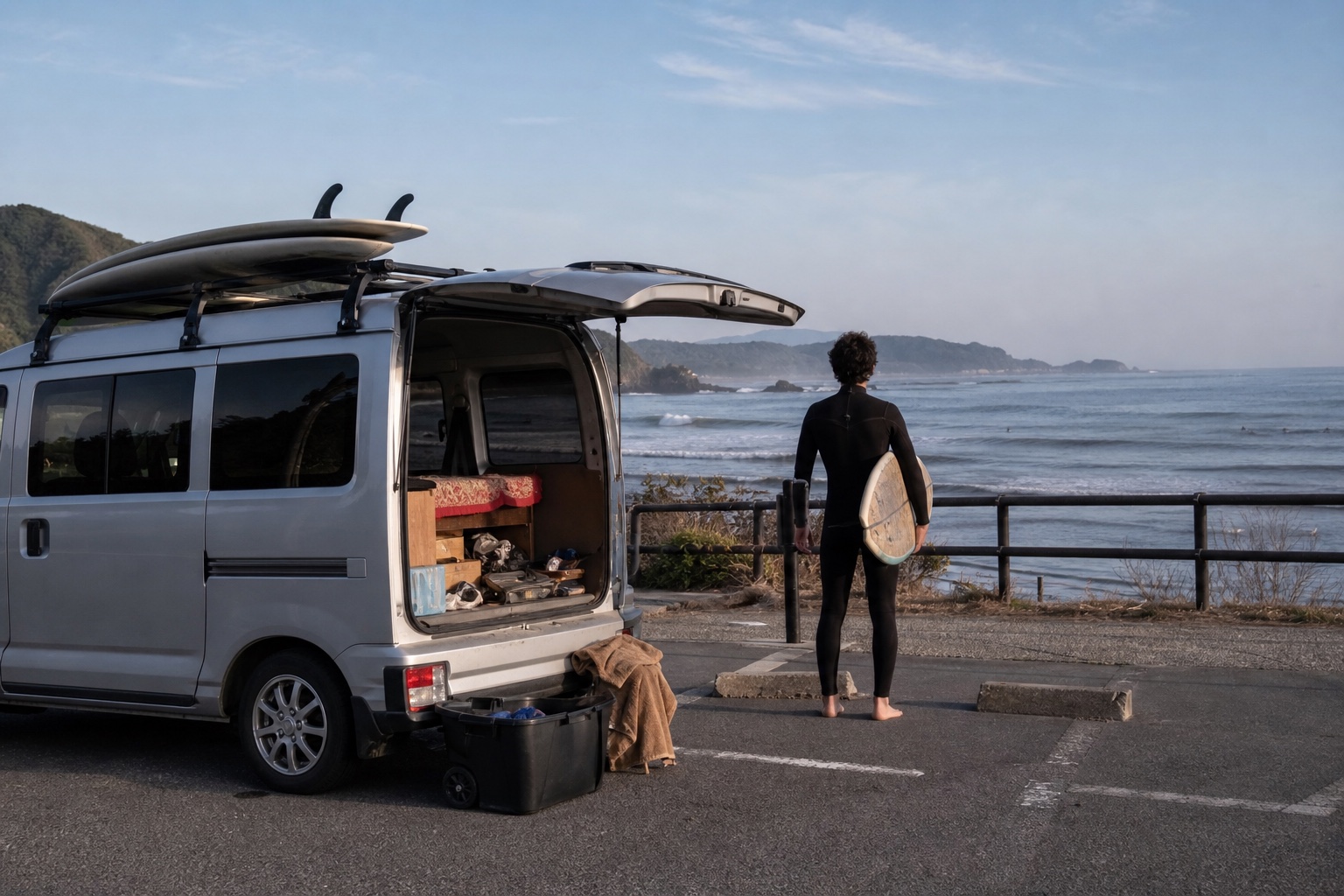
Surfing and vanlife fit together very naturally in Japan.
The coastline is long, the regions are varied, and many of the best surf areas are easier to enjoy with your own wheels than by train. A van lets you check different beaches, sleep closer to the coast, dry your gear between sessions, and change plans when the wind or swell moves.
But Japan is not the kind of place where you can simply park anywhere, sleep beside any beach, and treat the coastline like an open campground.
The best surf trips here work when you combine flexibility with respect for local rules. You need to think about parking, showers, wet gear, typhoon season, crowded weekends, and the difference between a beach that is good for surfing and a beach that is practical for a camper.
If you are still choosing coastal areas, start with our guide to the top beaches in Japan for a van or RV road trip. This article focuses more specifically on surf travel.
Why surfing works well with a van in Japan
A van gives you three advantages on a surf trip.
First, you can move with the conditions. Japan's coastlines face different directions, and a small change in wind or swell can make one beach messy while another spot nearby is much better.
Second, you can carry more gear. Surfboards, wetsuits, towels, water tanks, spare clothes, wax, repair kits, and camping equipment are awkward on trains but easy to manage in a van.
Third, you can turn a surf trip into a real road trip. Instead of staying in one town, you can link coastlines, onsen, mountain roads, local restaurants, and quiet sleeping spots.
That is the real appeal. You are not only chasing waves. You are building a flexible coastal itinerary.
Good surf regions to consider
Japan has many local surf breaks, but some regions are especially easy to understand for a first surf-focused van trip.
For more surf-specific research, Stormrider's Japan surf guide is useful for understanding regions and breaks, and the official Japan National Tourism Organization surfing guide gives a good overview for travelers.
Chiba
Chiba is one of the most important surf regions near Tokyo. The Pacific coast has many beaches, regular surf culture, surf shops, and enough infrastructure to make logistics easier.
For van travelers, the advantage is access. You can pick up a rental van around Tokyo or Narita, reach the coast quickly, and still combine the trip with other areas later.
The downside is crowds. Weekends, holidays, and good forecast days can get busy, especially at better-known breaks. Parking can also be limited near popular beaches, so arrive early and do not assume beachside spaces will be available.
Izu Peninsula
Izu is a strong choice if you want surf, scenery, onsen, and a road-trip feeling without going too far from Tokyo.
The peninsula has beautiful coastal roads, clear water, and several beach towns with surf culture. It is also one of the best regions for combining surfing with non-surf travel, especially if not everyone in the van surfs.
The tradeoff is terrain. Roads can be narrow, parking areas can be small, and moving around the peninsula takes longer than the map suggests. It is worth planning fewer stops and giving yourself more time.
For a broader route idea, see our Izu road trip article or our already made travel plans available.
Shikoku
Shikoku is one of Japan's classic surf road-trip regions. Kochi and Tokushima have a very different feeling from the Tokyo-side beaches: more rural, more open, and better suited to a slower coastal route.
This is a great region if you want a trip that feels less urban. You can combine surf beaches with rivers, temples, mountain roads, local food, and ferries.
The practical point is distance. Shikoku works best when you have enough days to make the journey worthwhile. It is not ideal as a rushed add-on to a short Tokyo itinerary.
Miyazaki
Miyazaki is one of the best-known surf areas in Japan, with a warm southern atmosphere and long Pacific beaches.
It is especially attractive if you want surf, palm trees, coastal roads, and a relaxed Kyushu route. A surf trip here can combine nicely with southern Miyazaki, Kirishima, Kagoshima, or the Aso area.
If you are thinking about this region, read our South Miyazaki recommendations as a starting point.
Sea of Japan coast
The Sea of Japan side is more seasonal and less obvious to visitors, but it can be very interesting, especially outside summer. Tottori, Shimane, Fukui, Ishikawa, Niigata, and Yamagata all have coastline worth researching if you are already building a route through those regions.
This side is not as simple as "go there and surf every day." Conditions are more variable, and winter weather can be serious. But for experienced surfers with a flexible route, it can add a completely different side of Japan.
Van logistics that matter for surfers
The surf itself is only half the planning. The real comfort of the trip depends on the small logistics.
Wet gear
Wet wetsuits, towels, and board bags can make a van unpleasant quickly. Bring or buy:
- a plastic tub for wetsuits
- a small clothesline or hangers
- extra towels
- a waterproof seat cover
- a simple water tank or shower bottle
Do not let salt water sit inside the van. Rinse what you can, keep wet items contained, and ventilate the vehicle whenever possible.
Showers
Some surf beaches have public showers in season, but many do not. Even when showers exist, they may be cold, coin-operated, seasonal, or closed outside beach season.
Plan around other bathing options:
- onsen
- sento
- coin showers
- campgrounds
- beach facilities in season
If you have tattoos, check bath rules before counting on a specific onsen.
Boards and vehicle size
Before renting a van, think about where the boards will go.
A longboard may not fit inside smaller vans without folding seats or sleeping awkwardly. Roof racks are useful, but not every rental van has them, and roof storage changes height clearance.
Ask the rental company before booking if you plan to carry surfboards. The best vehicle is not always the biggest one. It is the one that lets you sleep, store wet gear, and park without constant stress.
Overnight parking
This is where many surf travelers need to be careful.
A beach parking lot is not automatically a sleeping spot. Some close at night, some prohibit overnight parking, some are too exposed to wind, and some are heavily used by local residents.
Use proper overnight options when possible:
- campgrounds near the coast
- RV parks
- booked private parking spots
- michi no eki where overnight rest is tolerated and no local ban is posted
For the basics, read where to sleep in a campervan in Japan.
Surf etiquette in Japan
Surf etiquette matters everywhere, but it matters even more when you are traveling in a van with out-of-area plates or a rental vehicle.
Keep it simple:
- do not block local parking
- do not change clothes in a way that bothers nearby residents
- do not leave wax, food, bottles, or broken gear behind
- do not rinse salt water where it creates a mess for others
- respect local lineups and do not paddle straight into a crowded peak
- avoid loud cooking, music, or late-night noise near residential beach areas
Many Japanese surf communities are welcoming, but they are also local communities. A good trip depends on behaving like a guest.
When to plan a surf van trip
Summer is warm and easy for general beach travel, but it is also crowded, hot, and affected by beach-season traffic.
Autumn can be excellent because the weather is still comfortable, water can remain warm in many regions, and the big summer crowds begin to fade. It is also typhoon season, so forecasts and safety judgment matter.
Winter can bring stronger conditions in some areas, but cold weather, snow on inland roads, and rough seas can make logistics harder.
Spring is a good compromise for road trips, especially if you are not trying to maximize surf every day.
If surfing is the main goal, stay flexible. If the whole trip depends on one exact beach on one exact day, Japan can be frustrating. If the plan allows you to move between coastlines, it gets much better.
A simple surf van route idea
For a first surf-focused trip near Tokyo, keep it realistic:
Tokyo or Narita pickup -> Chiba coast -> Izu Peninsula -> Fuji area -> return
This gives you:
- easy rental access
- two different surf regions
- coastal roads
- onsen options
- a non-surf backup around Fuji
- a manageable return
For a longer trip, build around Kyushu or Shikoku instead. Those regions reward slower travel and feel more like true surf road trips.
Final advice
A good surf van trip in Japan is not about sleeping as close to the waves as possible every night.
It is about using the van to stay flexible, carry the gear comfortably, and connect surf days with everything else that makes a Japan road trip special: onsen, food, ferries, mountain roads, local towns, and quiet mornings by the coast.
Plan the parking carefully, respect local beaches, and leave enough room in the itinerary to chase conditions. That is when surfing and vanlife in Japan really start to make sense together.