
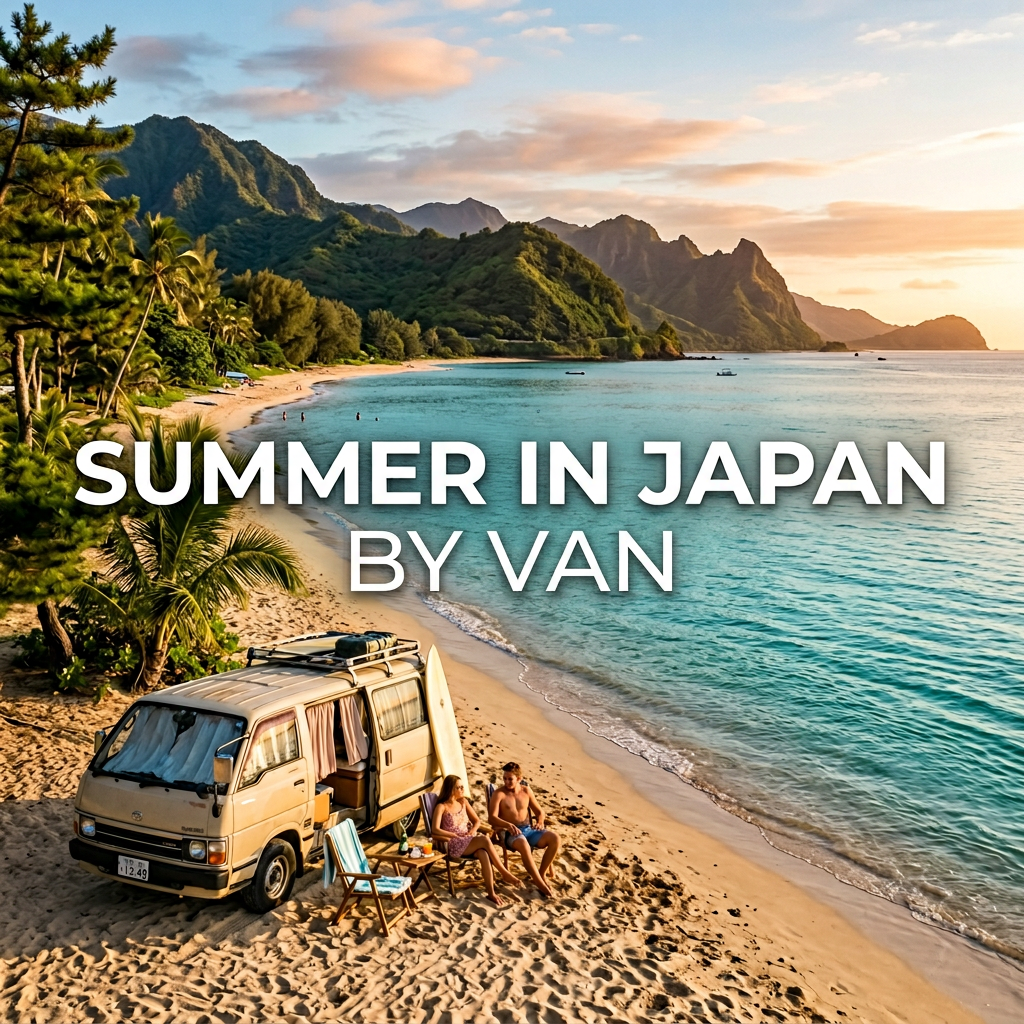
Summer in Japan brings high temperatures, intense humidity, and unique opportunities for vanlife including beach camping and festival access. The season requires preparation for heat management but rewards travelers with extended daylight and cultural events.
What Makes Summer Special
Summer is festival season across Japan, with major events like Kyoto's Gion Matsuri (July) and Aomori's Nebuta Matsuri (August). Fireworks displays occur regularly throughout the season.
Beaches become accessible for overnight parking at many locations, something not available during other seasons. Surf culture thrives along the coasts.
Mountain roads open fully, revealing alpine landscapes, wildflower meadows, and waterfalls inaccessible during winter months. High-altitude regions offer escape from lowland heat.
The Weather: What to Expect
Summer in Japan brings hot and humid conditions. June starts mild at 20 to 25°C, but humidity increases. By July and August, daytime temperatures regularly reach 30 to 35°C, sometimes higher, with humidity making conditions feel more intense.
The rainy season (tsuyu) occurs June through early July, bringing weeks of humid, overcast weather where everything feels damp.
Nights offer minimal relief, with temperatures dropping only to around 25°C while humidity persists. Proper ventilation is essential for comfortable sleep. See the guide on how to survive summer during vanlife for detailed techniques.
Typhoon season runs June through October, with storms bringing heavy rain, strong winds, and flooding. Monitoring forecasts and having plans to move to safer ground (parking garages, large roadside stations) is necessary.
What to Wear
Lightweight, breathable, quick-dry clothing works best. Cotton retains moisture in humidity. Synthetic hiking shirts, linen pants, and breathable shorts are practical. UV protection shirts are valuable given the intense sun.
A wide-brimmed hat protects the neck and face. Sunglasses are essential. Water shoes help on rocky beaches, and slip-on shoes are convenient for the van. A packable light rain jacket is useful for sudden storms.
Insect repellent is necessary, particularly near water at dusk when mosquitoes are active.
Vanlife Advantages
Beach camping: Many beaches allow overnight parking in summer, an option unavailable during other seasons. Early arrival secures spots before crowds. See places to stay with a camper for beach parking details.
Long days: Sunrise around 4:30 AM and sunset after 7 PM provide extended hours for exploration and travel.
Mountain access: High-altitude roads open, revealing landscapes closed all winter. Alpine flowers bloom and waterfalls run at full strength.
Fewer crowds inland: While beaches and festivals attract visitors, mountain trails see fewer hikers compared to spring and autumn.
Festival food: Summer festivals feature street food including yakitori, takoyaki, kakigori, and beer gardens.
Vanlife Disadvantages
The heat: Without air conditioning, van interiors can reach 50°C by midday, making the vehicle unusable during afternoon hours.
Typhoon risk: Storms disrupt travel plans, damage vehicles, and flood roads. Flexibility and weather monitoring are essential.
Mosquitoes: Active near rivers, lakes, and forests, particularly at dusk.
Crowded beaches: Popular spots fill by 9 AM on weekends. Early arrival or seeking lesser-known coastlines is necessary.
Higher costs: Expenses increase for fans, powered sites, and cold drinks.
Trash: Increased outdoor eating and beach visits lead to faster trash accumulation. See dealing with trash while vanlife for management tips.
Food Specialties
Summer food is designed to cool you down:
Kakigori: Shaved ice mountains with syrup. Found at every beach, festival, and street corner. My favorite is matcha with condensed milk.
Hiyashi chuka: Cold ramen with toppings. The perfect hot weather dinner when you cannot face hot soup.
Unagi: Grilled eel, traditionally eaten in summer for stamina. Rich and satisfying.
Watermelon: Summer fruit of choice. Beach BBQs are not complete without it.
Somen: Cold, thin wheat noodles you dip in sauce and slurp. Refreshing and light.
Beer: Ice cold beer becomes practically medicinal. Convenience stores have endless craft options now.
Recommended Places
Shikoku: The smallest main island has incredible beaches with fewer crowds than Honshu. The 88 temple pilgrimage route offers cultural depth. Milder than the mainland.
Japanese Alps: Kamikochi, Tateyama, the Northern Alps. High elevation means cool temperatures. Alpine hiking at its best. Escape the heat.
Hokkaido: Summer is the perfect time to explore Japan's northern island. Mild weather, open roads, lavender fields, fresh seafood. I spend as much time here as possible in July and August.
Okinawa: Tropical heat but crystal water. Snorkeling, diving, island hopping. Different from mainland Japan entirely.
Fuji Five Lakes: Higher elevation, cooler nights, swimming and water sports. The lakes reflect the mountain beautifully.
Aomori: For the Nebuta Matsuri in early August. Massive illuminated floats, drumming, dancing. One of Japan's great festivals.
Practical Tips
Ventilation saved my sanity. I installed roof vents, bought battery powered fans, used window screens. Park in shade whenever possible, even if it means a longer walk. The afternoon sun will cook your van.
Hit the beach early. 6 AM arrival gets you the best spots and the coolest part of the day. Swim, then move to higher elevations or air conditioned spaces by noon.
Carry more water than you think you need. Dehydration hits fast in this humidity. I carry 20 liters minimum.
Plan routes to escape the heat. When the lowlands become oppressive, head for the mountains. Check elevation before you drive.
Embrace the festival culture. Even small town festivals are magical. Ask locals when events are happening. Some of my best summer memories are random local fireworks shows I stumbled upon.
Summer vanlife in Japan is challenging but rewarding. You learn to work with the heat, not against it. The long days, festival energy, and beach access make it worth the effort. Just respect the weather and stay cool.