
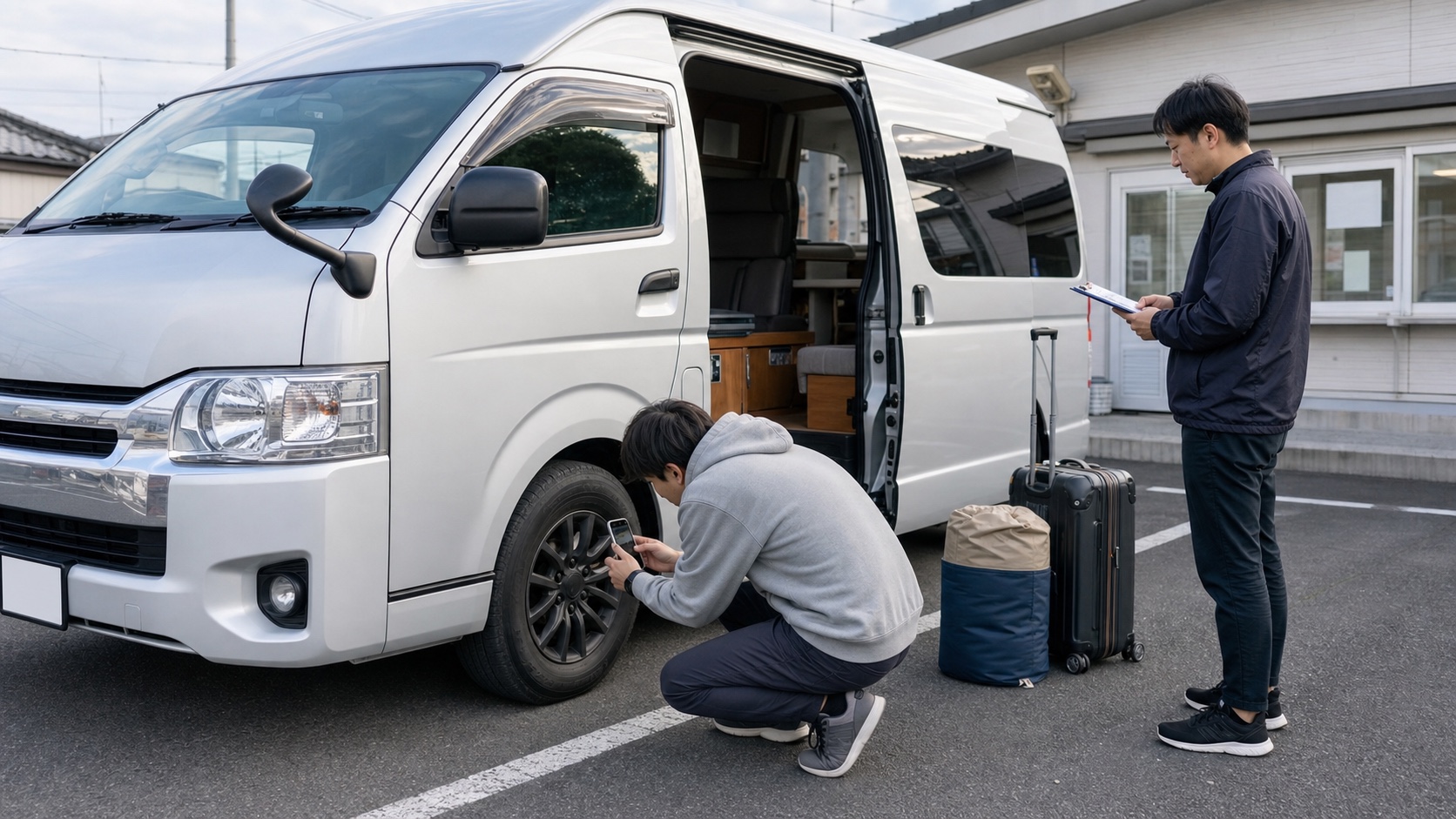
The first hour with a rental campervan matters more than people think.
You are tired from travel, excited to start the trip, and probably trying to understand a vehicle, a rental agreement, Japanese roads, navigation, luggage, bedding, and insurance all at once.
That is exactly when small details get missed.
A good pickup checklist prevents most of the avoidable problems: unclear damage, missing gear, wrong fuel, surprise return fees, ETC card confusion, unfamiliar controls, and not knowing what to do if something goes wrong.
Use this guide before you drive away from the rental office.
If you are still choosing a company or vehicle, start with our guide to renting a campervan in Japan.
1. Confirm your documents first
Before anything else, make sure the rental company accepts your driving documents and has recorded them correctly.
Check:
- passport
- driver's license
- International Driving Permit or official translation, depending on your license country
- rental confirmation
- insurance option
- emergency contact details
- additional drivers
If there will be more than one driver, each driver usually needs to be registered before driving. Do not assume your travel partner is covered automatically.
Also confirm whether the company needs your address in Japan for the first night, especially if you are a tourist and do not have a local address.
2. Understand the insurance and deposit
Before leaving, ask what happens in these situations:
- small scratch
- tire puncture
- windshield chip
- lost key
- dead battery
- single-vehicle accident
- accident involving another vehicle
- towing
- replacement vehicle
Rental insurance is not always the same as "nothing can cost extra." There may be deductibles, non-operation charges, exclusions, or separate fees for damage that prevents the vehicle from being rented to the next customer.
The important thing is not to memorize every legal detail at the counter. The important thing is to know who to contact first and what not to approve without permission.
If there is an accident, follow the steps in our guide to what to do after a car accident in Japan.
3. Photograph the vehicle carefully
Take photos and video before loading your bags.
Walk around the van slowly and capture:
- front bumper
- rear bumper
- each side panel
- mirrors
- roof and roof rack if visible
- wheels and tires
- windshield
- existing scratches
- dents
- paint marks
- interior stains or broken parts
- dashboard mileage
- fuel level
Do this even if the staff are friendly and the vehicle looks fine. It protects both sides.
If you see damage that is not marked on the inspection sheet, ask the staff to add it before you leave. A quick photo at pickup is much easier than a difficult conversation at return.
4. Check the tires
Tires are easy to ignore at pickup, but they matter a lot on a road trip.
Check:
- obvious cracks or bulges
- low pressure
- uneven wear
- spare tire or repair kit
- jack and tools if provided
- winter tires or chains if relevant
If you are traveling in winter, confirm the tire situation clearly. Mountain roads, ski areas, Nagano, Tohoku, Hokkaido, and snowy onsen towns can require winter tires or chains depending on the route and weather.
Also ask what to do if you get a puncture. Some rental companies want you to call them before using a roadside service or replacing a tire.
5. Confirm the fuel type
Before you leave the rental lot, know exactly what fuel the van uses.
Ask the staff to show you:
- fuel type
- fuel cap location
- return fuel requirement
- nearest gas station if you need to fill immediately
In Japan, common fuel labels include regular gasoline, high-octane gasoline, diesel, and kerosene for some heaters. Do not guess.
Putting the wrong fuel in a vehicle can become a serious and expensive problem. If you are unsure at a gas station, ask staff before filling.
6. Ask about ETC and toll roads
Japan's expressways are convenient but expensive, and ETC makes tolls much smoother.
At pickup, confirm:
- whether the van has an ETC reader
- whether an ETC card is included, rented separately, or not available
- how toll charges are calculated after return
- whether you should keep toll receipts
- what to do if the ETC gate does not open
If there is no ETC card, you can still use many expressways by taking a paper ticket at the entrance and paying at the exit, but it is less convenient.
Also ask whether the company recommends any route passes or discount options for your itinerary.
7. Test the basic controls
Do not wait until night or heavy rain to learn the controls.
Before leaving, test:
- headlights
- hazard lights
- windshield wipers
- side mirrors
- air conditioning
- heater
- defogger
- parking brake
- reverse camera
- navigation system
- phone connection
- USB or power outlets
If the vehicle is larger than what you normally drive, ask about height, length, width, and turning radius. Write the height somewhere visible if you may enter parking garages, ferry decks, hotel parking, or shopping centers.
8. Learn the camper systems
A campervan is not only a car. It may also have a sleeping setup, battery, lights, water, fridge, heater, fan, or cooking equipment.
Ask the staff to demonstrate:
- bed setup
- seat conversion
- interior lights
- house battery monitor
- inverter
- fridge
- ventilation fan
- heater
- water tank
- grey water tank
- stove or cassette gas setup
- curtains or window covers
If something has a switch, ask what happens if you leave it on overnight.
The most important question is simple: what can I use while parked without draining the engine battery?
9. Count the included equipment
Rental campervans can include very different equipment depending on the company and plan.
Before leaving, check what is actually inside:
- bedding
- pillows
- towels
- cookware
- plates and cups
- cutlery
- knife and cutting board
- stove
- gas canisters
- lighter
- table
- chairs
- extension cable
- power adapter
- water tank
- trash bags
- window covers
If something was promised in the booking but is missing, ask immediately.
Also ask what needs to be returned clean, what can be disposed of, and whether used gas canisters should be returned or replaced.
10. Check navigation before moving
Set your first destination before leaving the rental office.
This should not be a difficult mountain campsite or a tiny beach parking lot. For the first drive, choose something easy:
- supermarket
- large shopping center
- nearby campground
- service area
- simple paid parking lot
This gives you time to get used to the vehicle before narrow roads, night driving, or rural navigation.
If the van has built-in navigation, ask whether it accepts phone numbers, map codes, addresses, or only Japanese input. Google Maps is useful, but built-in navigation can sometimes handle expressway entrances and parking access more calmly.
11. Ask about sleeping rules
Different rental companies give different advice about where you can sleep.
Ask:
- whether sleeping at michi no eki is allowed under their rules
- whether they recommend RV parks or campgrounds
- whether any regions or roads are not allowed
- whether you can use ferries
- whether snow roads or unpaved roads are restricted
- whether the vehicle can enter central city parking areas
The legal and etiquette side of sleeping in a vehicle is explained in our guide to places to stay with a camper in Japan.
12. Understand the return rules
Return problems usually come from unclear expectations.
Before leaving, confirm:
- return time
- late fee
- fuel level
- cleaning expectations
- trash rules
- bedding return
- gas canister return
- ETC/toll settlement
- damage inspection process
- after-hours return rules
If you are returning near Tokyo, Osaka, Fukuoka, Sapporo, or another busy city, plan extra time. Traffic, gas station stops, and final cleaning take longer than expected.
Do not schedule your van return too close to an international flight.
13. Save emergency contacts
Before you drive away, save the important phone numbers and links:
- rental company
- after-hours emergency number
- roadside assistance
- police: 110
- fire or ambulance: 119
- insurance contact if separate
- your first night's accommodation or campground
Also ask whether the rental company prefers phone, WhatsApp, LINE, email, or another contact method during the trip.
If you have a mechanical issue, read our guide to common Japanese phrases at the mechanic.
Quick pickup checklist
Before leaving the rental office, make sure you can answer these questions:
- Are all drivers registered?
- Do I understand the insurance and deposit?
- Did I photograph the vehicle?
- Is existing damage marked?
- What fuel does the van use?
- Is there an ETC card?
- What is the vehicle height?
- How do the lights, wipers, and defogger work?
- What can I use without draining the engine battery?
- Is all booked equipment included?
- Where am I going first?
- What time and condition does the van need to be returned in?
- Who do I contact in an emergency?
Final advice
Do not rush pickup.
The rental staff may be used to explaining the same things every day, but this vehicle is new to you. Ten extra minutes at the counter can prevent hours of confusion later.
Take photos, ask simple questions, set an easy first destination, and start the trip calmly. A good vanlife trip in Japan begins before the first scenic road.