
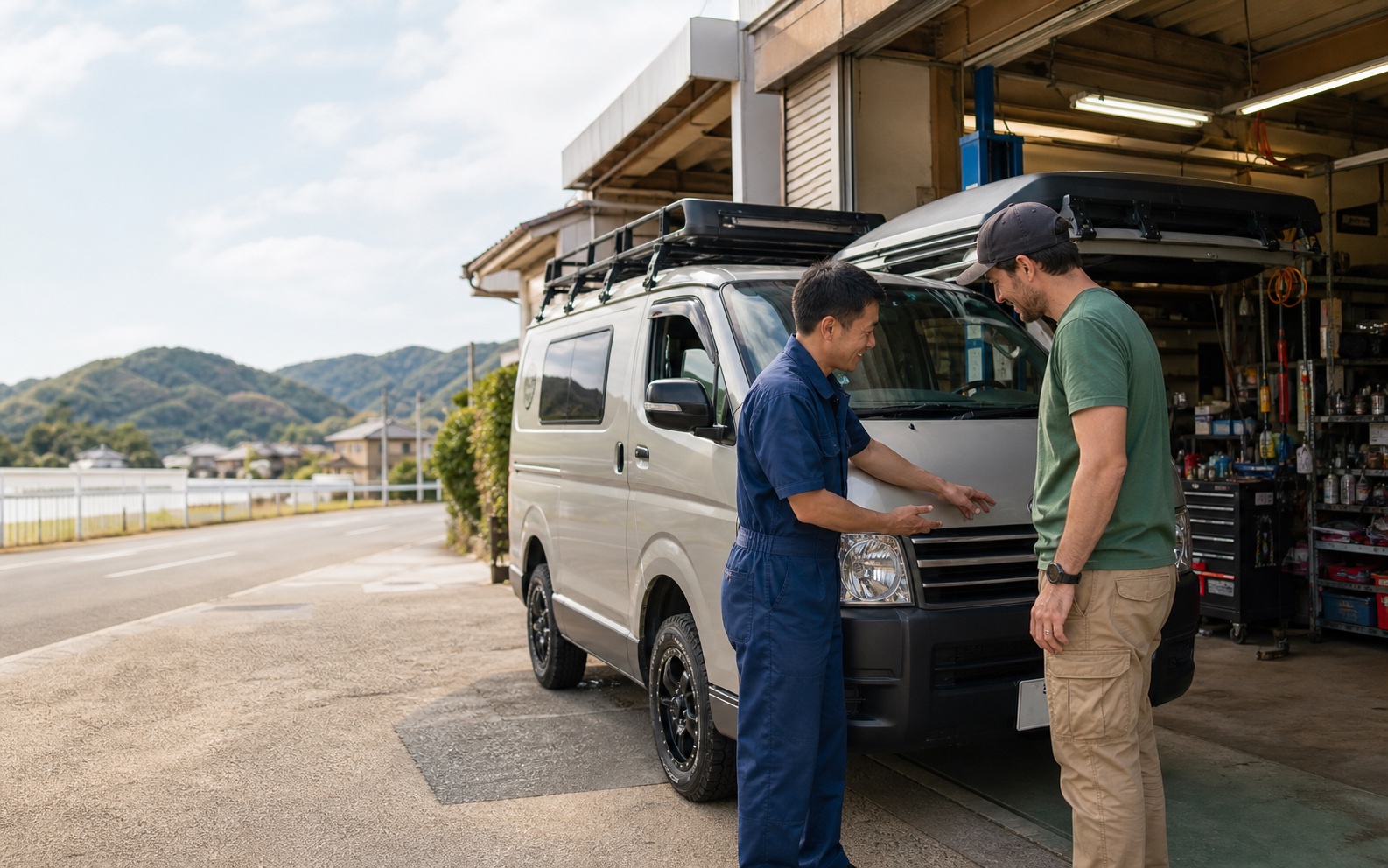
Car trouble is never fun on a road trip, and it feels more stressful when the mechanic speaks Japanese and your rental van is also your bedroom.
The good news is that garages in Japan are usually organized, careful, and clear about estimates. The hard part is language, timing, and knowing which shop to contact first.
This guide gives you the basic flow of visiting a Japanese mechanic, the main words you will hear, and the phrases that make the conversation much easier.
If you are still planning your trip, also read our driving in Japan guide before getting on the road.
If you are driving a rental van
If the vehicle is rented, contact the rental company first unless the vehicle is unsafe, blocking traffic, leaking fluid, smoking, or has been in an accident. If there was any crash or impact, follow the car accident steps for Japan before treating it as a normal repair visit.
Rental companies often have their own rules for repairs, towing, replacement vehicles, insurance, and where the van can be taken. Even a small repair can become an insurance or billing problem if you approve work without telling them.
Use this simple order:
- move to a safe place if you can
- take photos of warning lights, damage, tires, and the dashboard
- call or message the rental company
- ask where they want you to go
- do not approve paid repairs unless they confirm it is okay
If the van cannot move safely, ask the rental company about roadside assistance or call a roadside service such as JAF.
Types of places that can help
Not every car problem needs the same kind of shop.
Dealer - ディーラー, diraa
Best for newer vehicles, manufacturer-specific parts, warranty questions, and electrical warnings. Dealers can be reliable but may be slower or more expensive.
Repair shop - 整備工場, seibi kojo
A general mechanic. Good for diagnosis, repairs, oil, brakes, belts, leaks, batteries, and many campervan problems.
Gas station service bay - ガソリンスタンド, gasorin sutando
Useful for tire pressure, oil checks, batteries, wipers, light bulbs, and quick advice. They may not handle deeper repairs.
Tire shop - タイヤショップ, taiya shoppu
Best for punctures, tire replacement, rotation, balancing, and winter tire questions.
Roadside assistance - ロードサービス, roodo saabisu
Use this when the vehicle cannot move, has a flat tire in a bad location, has a dead battery, or needs towing.
What to expect at a Japanese mechanic
Many garages prefer appointments, especially dealers and busier repair shops. Walk-ins are possible for simple problems, but do not assume they can inspect the vehicle immediately.
At check-in, staff will usually ask what happened, when it started, and whether the vehicle can still drive. If the issue is a sound, a smell, or a warning light, show photos or a short video. That is often clearer than trying to explain everything in Japanese.
For anything more than a quick check, ask for an estimate before approving repairs. In Japanese this is 見積もり, mitsumori. Parts may need to be ordered, especially for imported vehicles, older campers, or converted vans.
You may be asked to wait, come back later, or leave the vehicle overnight. If you need a replacement car, the word is 代車, daisha, but availability is never guaranteed.
Payment is usually by cash or card, depending on the shop. Ask before the work starts if you are unsure. If you need proof for a rental company or insurance, ask for a receipt: 領収書, ryoshuusho.
The most useful mechanic words
| Japanese | Romaji | Meaning |
|---|---|---|
| 修理 | shuuri | repair |
| 整備工場 | seibi kojo | repair shop / mechanic workshop |
| 点検 | tenken | inspection / check |
| 見積もり | mitsumori | estimate / quote |
| 車検 | shaken | mandatory vehicle inspection |
| 故障 | kosho | breakdown / mechanical failure |
| 異音 | ion | strange noise |
| 警告灯 | keikokuto | warning light |
| 代車 | daisha | replacement car / loaner car |
| 領収書 | ryoshuusho | receipt |
Common car parts and problems
| English | Japanese | Romaji |
|---|---|---|
| Engine oil | エンジンオイル | enjin oiru |
| Tire | タイヤ | taiya |
| Flat tire | パンク | panku |
| Battery | バッテリー | batterii |
| Brake | ブレーキ | bureeki |
| Coolant | 冷却水 | reikyakusui |
| Engine | エンジン | enjin |
| Windshield wiper | ワイパー | waipaa |
| Warning light | 警告灯 | keikokuto |
| Leak | 漏れ | more |
Phrases for explaining the problem
| Japanese | Romaji | English |
|---|---|---|
| 車を点検してもらえますか? | Kuruma o tenken shite moraemasu ka? | Could you check the car? |
| 変な音がします。 | Hen na oto ga shimasu. | It is making a strange noise. |
| 警告灯がついています。 | Keikokuto ga tsuite imasu. | A warning light is on. |
| エンジンがかかりません。 | Enjin ga kakarimasen. | The engine will not start. |
| タイヤがパンクしました。 | Taiya ga panku shimashita. | I have a flat tire. |
| バッテリーが上がりました。 | Batterii ga agarimashita. | The battery is dead. |
| ブレーキの調子が悪いです。 | Bureeki no choushi ga warui desu. | The brakes do not feel right. |
| ここから液体が漏れています。 | Koko kara ekitai ga morete imasu. | Fluid is leaking from here. |
| レンタカー会社に連絡します。 | Rentakaa gaisha ni renraku shimasu. | I will contact the rental company. |
Phrases for estimates, timing, and payment
| Japanese | Romaji | English |
|---|---|---|
| 見積もりをお願いします。 | Mitsumori o onegai shimasu. | Please give me an estimate. |
| 修理はいくらぐらいですか? | Shuuri wa ikura gurai desu ka? | About how much will the repair cost? |
| どのくらい時間がかかりますか? | Dono kurai jikan ga kakarimasu ka? | How long will it take? |
| 今日中に終わりますか? | Kyoujuu ni owarimasu ka? | Will it be finished today? |
| 部品の注文が必要ですか? | Buhin no chuumon ga hitsuyou desu ka? | Do you need to order parts? |
| 修理する前に連絡してください。 | Shuuri suru mae ni renraku shite kudasai. | Please contact me before repairing it. |
| クレジットカードは使えますか? | Kurejitto kaado wa tsukaemasu ka? | Can I use a credit card? |
| 領収書をお願いします。 | Ryoushuusho o onegai shimasu. | Please give me a receipt. |
Small etiquette points that help
Japanese mechanics tend to appreciate clear, calm explanations. A few practical things make the visit smoother:
- arrive on time if you have an appointment
- park where staff tell you, not in front of the workshop entrance
- bring the vehicle papers if you have them
- show photos, videos, and dashboard lights
- ask before entering the garage area
- confirm the price before approving work
- keep the receipt for the rental company or insurance
If you are sleeping in the vehicle, remove valuables and anything you need overnight before leaving it at the shop. If the fridge, battery system, or camper conversion has special switches, explain them or leave a short note.
When not to keep driving
Do not keep driving just because the nearest mechanic is inconvenient. Stop and ask for help if:
- the brake warning light is on
- the engine temperature is high
- smoke is coming from the vehicle
- a tire is damaged or losing air
- steering feels strange
- fluid is leaking heavily
- the vehicle was hit in an accident
Japan is full of mountain roads, tunnels, narrow coastal lanes, and expressways where a small problem can become dangerous quickly. If the vehicle feels unsafe, pull over somewhere safe and call for help.
A simple script you can show a mechanic
If you are stuck, copy this and show it at the shop:
すみません。この車を点検してもらえますか?
レンタカーなので、修理の前に見積もりをお願いします。
必要ならレンタカー会社に連絡します。
Meaning:
Excuse me. Could you check this car?
This is a rental car, so please give me an estimate before any repair.
If needed, I will contact the rental company.
That short message covers most situations: check the vehicle, do not start paid work without an estimate, and remember that a rental company may need to approve the next step.