
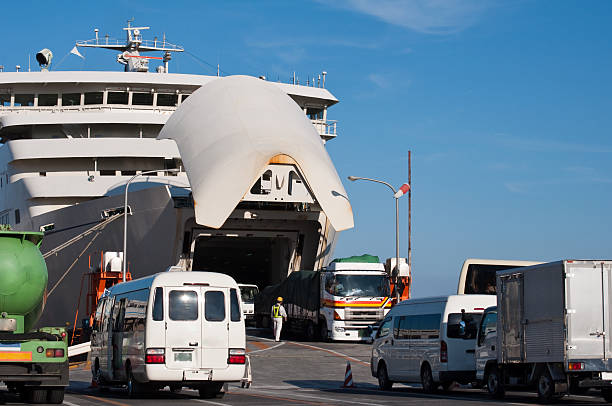
When people plan a van trip in Japan, they usually focus on roads: expressways, scenic routes, mountain passes, parking, and tolls.
But one of the best route-planning tools is often not a road at all.
Ferries can make an itinerary much cleaner. Instead of driving back through the same corridor, circling a bay, or retracing your route to reach the next region, you can cross the water with your van and keep the trip moving forward.
That is why ferries are often such a good option for perfecting a van trip in Japan. They do not just save time. They help you design a better loop.
If you travel with family, it's also an amazing adventures for kids!
The real advantage of ferries
The biggest benefit is not only distance. It is structure.
On a long trip, backtracking weakens the itinerary. You end up sleeping in the same area twice, repeating the same highway section, and spending valuable rental days just getting back to where the route becomes interesting again.
A well-placed ferry fixes that problem.
It lets you:
- connect two parts of a trip that do not link well by road
- avoid passing twice through the same bottleneck
- build a larger regional loop instead of an out-and-back route
- keep the driving days more varied and less tiring
For van travelers, that matters a lot. The best trips usually feel like a continuous journey, not like a series of detours that fold back on themselves.
Three ferry examples that make a route better
These are not necessarily the biggest ferry routes in Japan. They are good examples because they improve the shape of a road trip.
1. Toba - Irago
This is a very smart ferry to use when your trip includes Mie and the Pacific side of Aichi.
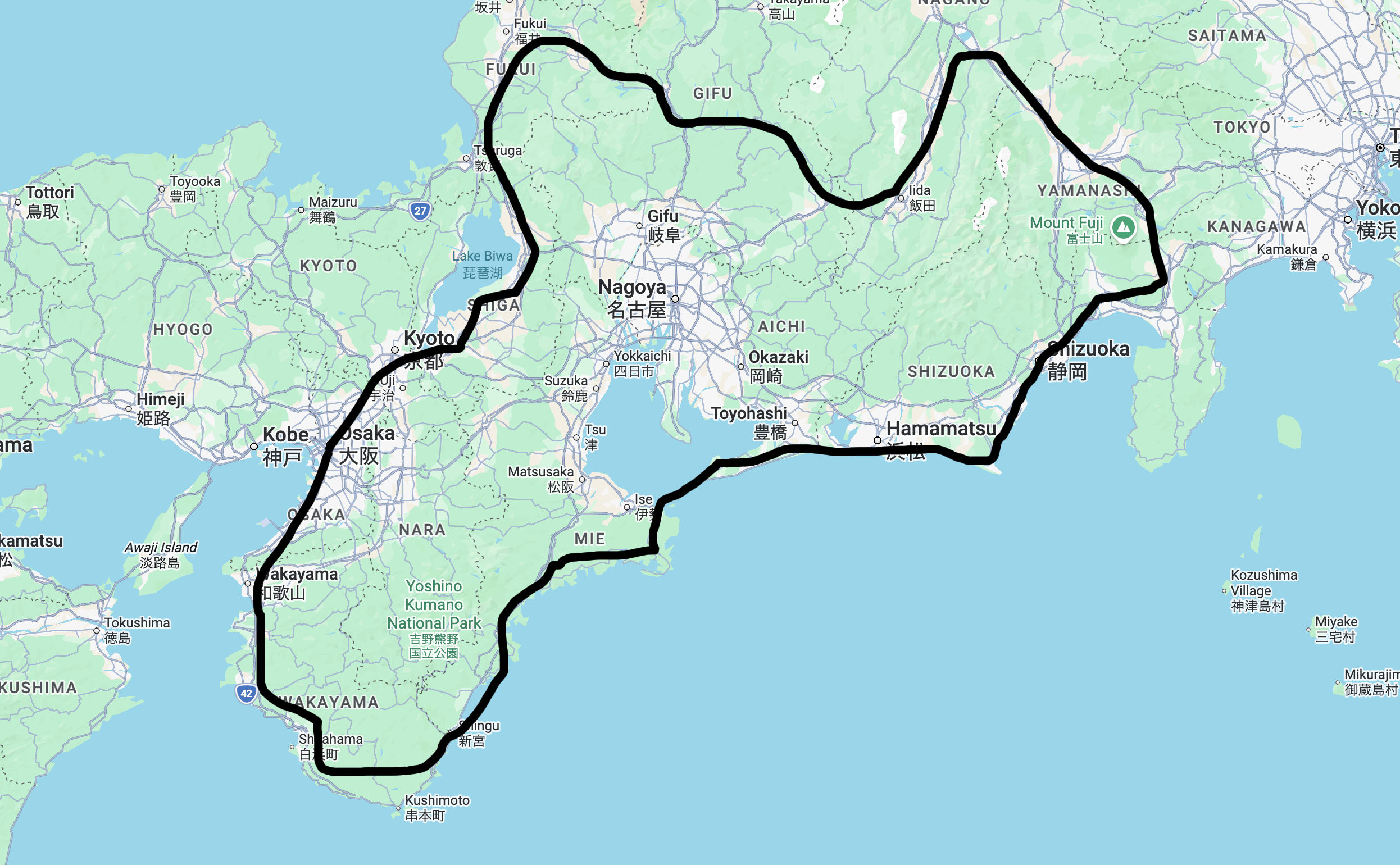
Toba - Irago is a simple crossing that helps turn an Ise-Shima trip into a larger loop instead of a backtrack.
Without the ferry, a route through Ise-Shima often forces you to drive back north and then go around Ise Bay by road. That means repeating part of Mie or bending the route inland before you are ready to do so.
With the Toba - Irago crossing, you can leave the Ise-Shima side, cross the bay, and continue directly toward the Atsumi Peninsula, Toyohashi, Hamamatsu, or the Shizuoka side.
One loop idea:
Kansai -> Ise -> Shima -> Toba -> Irago -> Hamamatsu -> Shizuoka -> inland return
This is exactly the kind of ferry that turns an awkward route into a satisfying loop. Instead of undoing part of the trip, you keep moving into new scenery.
2. Yawatahama - Usuki
This is one of the best ferry examples for travelers combining Shikoku and Kyushu.
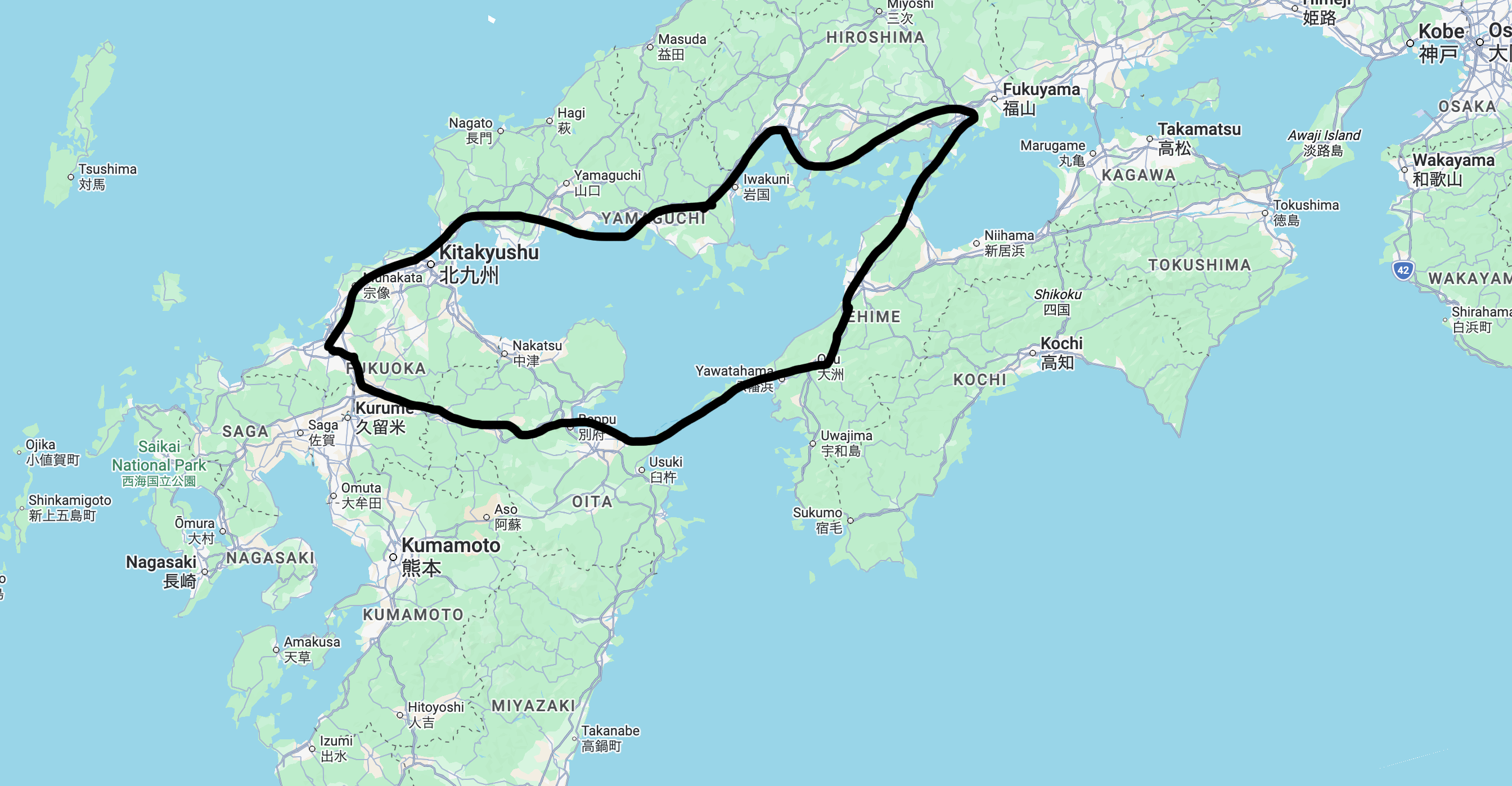
Yawatahama - Usuki is one of the cleanest ways to connect a Shikoku loop with the east side of Kyushu.
If you explore western Shikoku by road and then want to continue into Kyushu, the road-only alternative can feel inefficient. You may end up returning toward the Seto bridges or shaping the trip around a much longer land connection than you actually want.
The Yawatahama - Usuki ferry solves that neatly.
It lets you finish the Ehime side of your loop, cross directly into Oita Prefecture, and keep going through eastern or central Kyushu. For van travelers, that creates a much more natural west Japan route.
One loop idea:
Honshu -> Shikoku -> Kochi or Ehime -> Yawatahama -> Usuki -> Beppu -> Aso -> Fukuoka -> return
Instead of retracing your steps, you connect two major regions in one clean movement. That is the kind of change that makes a multi-week van trip feel much more complete.
3. Tabira - Nagasu
This is a smaller route, but it is extremely useful when building a western Kyushu loop.
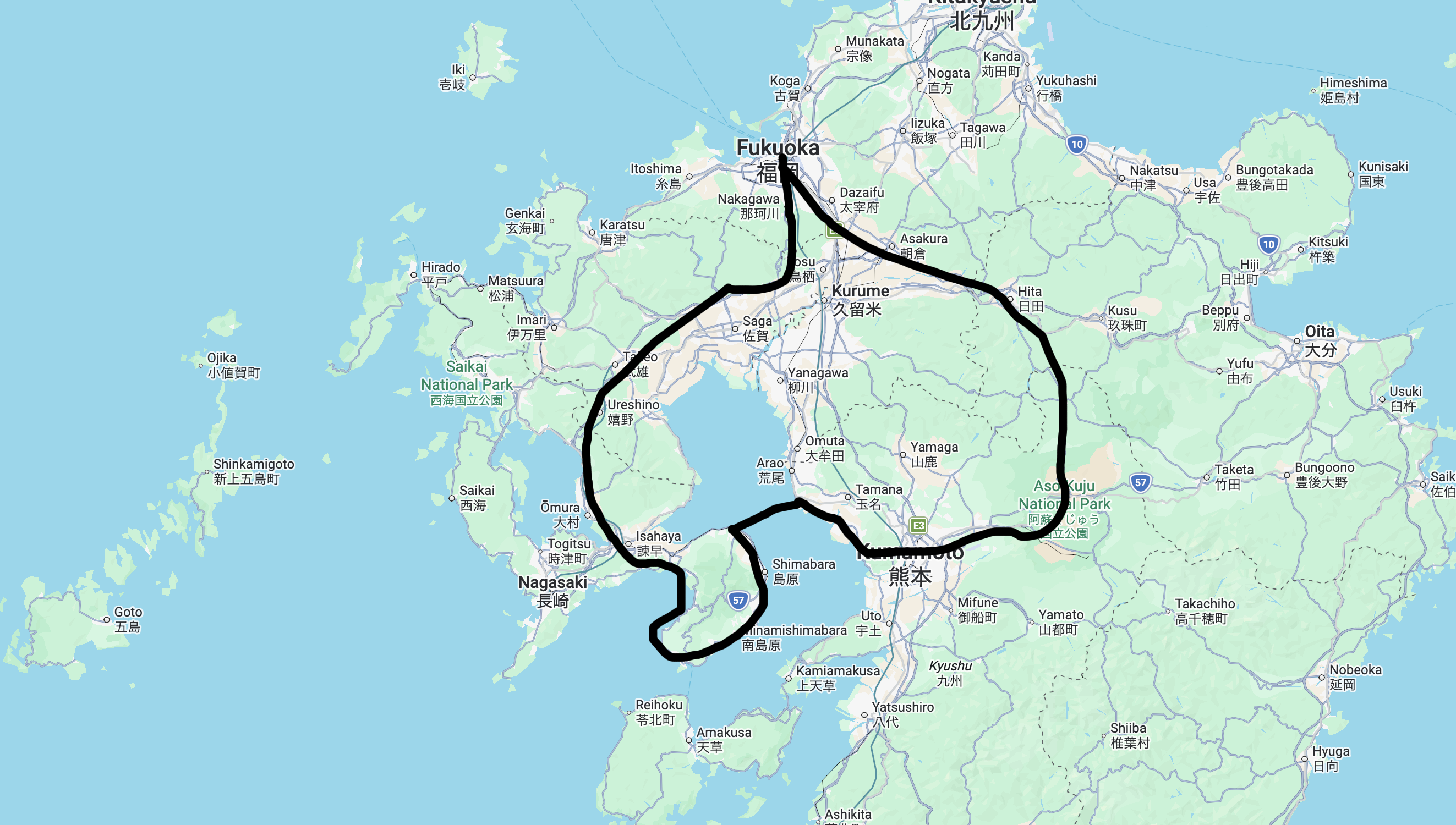
Tabira - Nagasu helps you move from the Nagasaki side to Kumamoto without repeating the same northern Kyushu roads.
One of the classic problems in Kyushu is that areas like Sasebo, Hirado, and the northwest of Nagasaki Prefecture do not connect smoothly by road to the Kumamoto side. If you stay on land the whole time, you often need to swing back through the same general corridor before the route opens up again.
The Tabira - Nagasu ferry helps you skip that repetition.
You can explore the Nagasaki side first, cross the Ariake Sea, and continue straight toward Kumamoto, Mount Aso, or central Kyushu.
One loop idea:
Fukuoka -> Karatsu -> Sasebo -> Hirado -> Tabira -> Nagasu -> Kumamoto -> Aso -> Yufuin -> Fukuoka
That is a much better loop than driving back through the same northern Kyushu roads just to change sides.
Why this matters even more with a van
In a normal car, backtracking is annoying. In a camper or van, it can affect the whole rhythm of the trip.
Repeated road sections usually mean repeated sleep areas, repeated logistics, and more days that feel like transfer days instead of travel days.
Ferries often improve all of that at once:
- less unnecessary driving
- fewer toll-road compromises
- more efficient use of rental time
- an itinerary that keeps unfolding instead of resetting
They can also make the trip feel more memorable. Boarding with your van, watching the coastline disappear, then driving out in a different region a little later is part of the experience, not just transportation.
When a ferry is worth using
A ferry is usually a good idea when it does one of these two things:
- it removes a clear backtrack
- it opens the next part of the loop in a more natural direction
That is why short practical crossings like Toba - Irago, Yawatahama - Usuki, and Tabira - Nagasu can be so valuable. They are not only transport links. They are route-design tools.
If you are building a van itinerary in Japan, it is worth looking at the map and asking one simple question:
Where am I about to repeat myself?
Very often, that is exactly where a ferry can make the trip better.
If you want to compare more routes, you can explore our Japan car ferry map to see where ferries can help connect different parts of your itinerary, or browse the full Japan ferry routes list for a crawlable overview of every route in the dataset.
Before you book
Before boarding a ferry with a van in Japan, always double-check:
- your vehicle length category
- height rules if you have extra gear on the roof or rear
- check-in deadlines for vehicles
- whether passengers must be booked separately
- seasonal demand during weekends and holidays
The best ferry is not always the longest or most famous one. Often, it is the short crossing that removes the worst part of the drive and makes the whole trip flow properly.