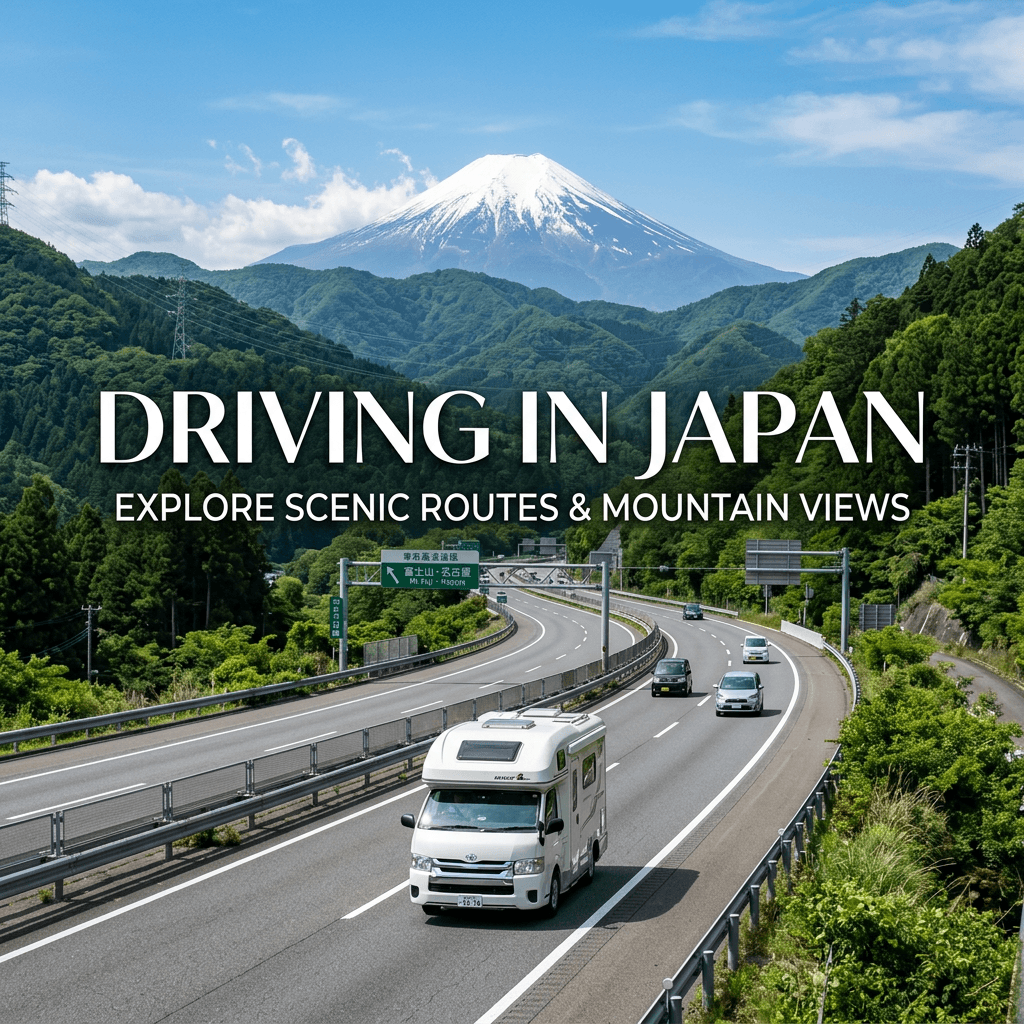
Driving in Japan is generally safe and straightforward, but it comes with specific rules and cultural norms that differ from other countries. This guide covers everything you need to know before getting behind the wheel.
Can tourists drive in Japan?
Yes, tourists can drive in Japan if they have the correct license documents before they arrive. For most short-term visitors, that means carrying both your normal license and a valid International Driving Permit based on the 1949 Geneva Convention. Some nationalities need an official Japanese translation instead of an IDP.
Quick driving checklist
| Topic | What to know before driving |
|---|---|
| Driving side | Japan drives on the left, with right-hand-drive vehicles |
| License | Most visitors need a 1949 Geneva Convention IDP plus their home license |
| Speed | Urban roads are often 40-50 km/h, rural roads 50-60 km/h, expressways around 100-120 km/h |
| Tolls | Expressways are convenient but expensive; ask rental companies about ETC cards |
| Parking | Do not assume street parking is allowed; use marked lots and check height limits |
| Alcohol | Japan has strict drink-driving penalties; avoid alcohol completely if driving |
| Phone use | Holding a phone while driving is illegal |
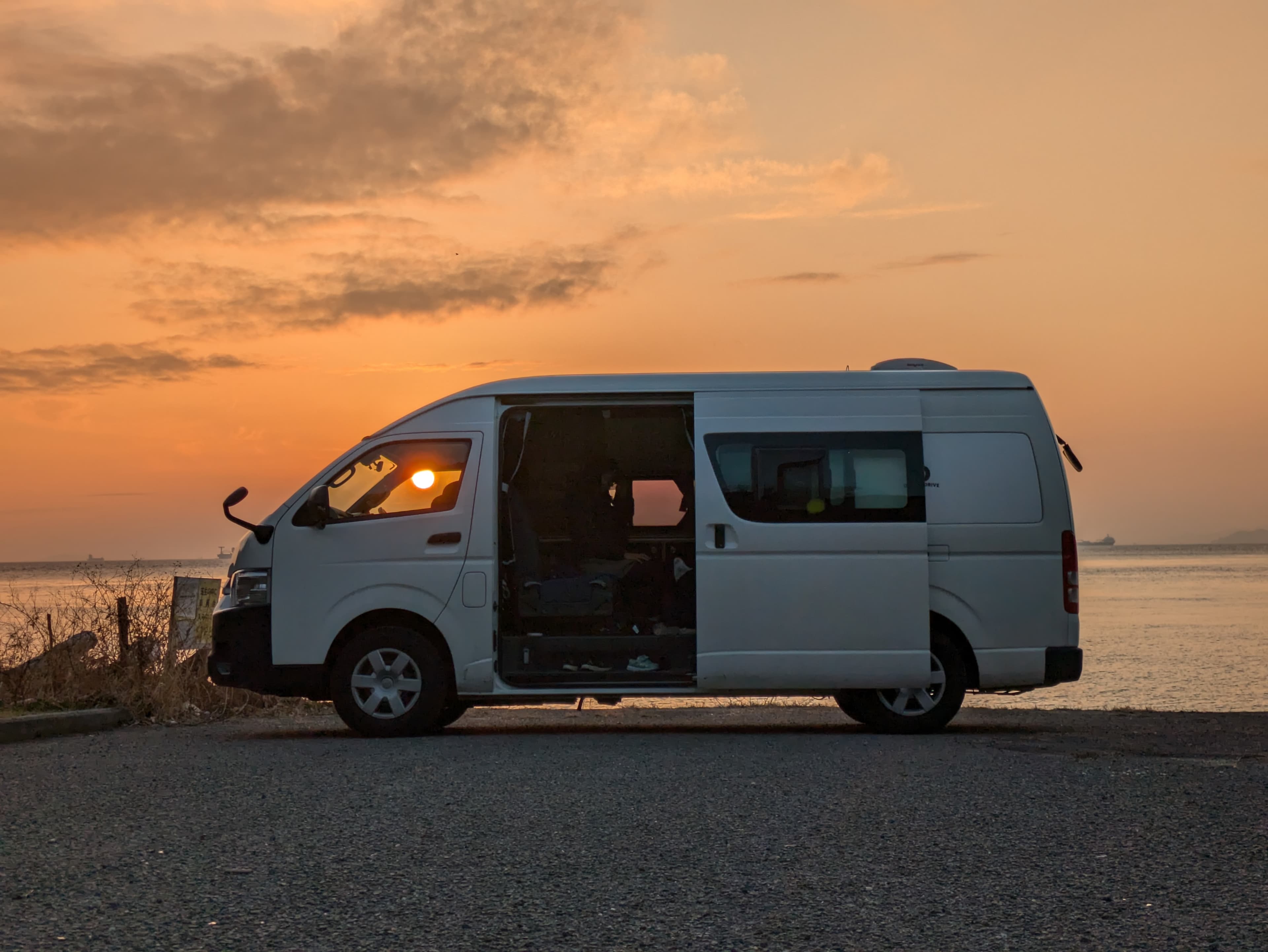
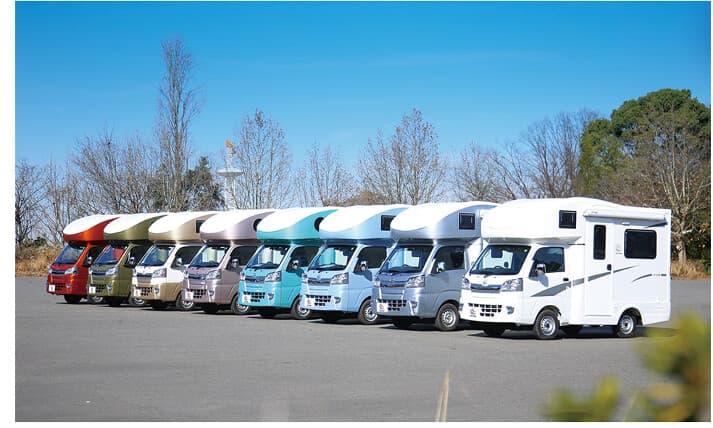
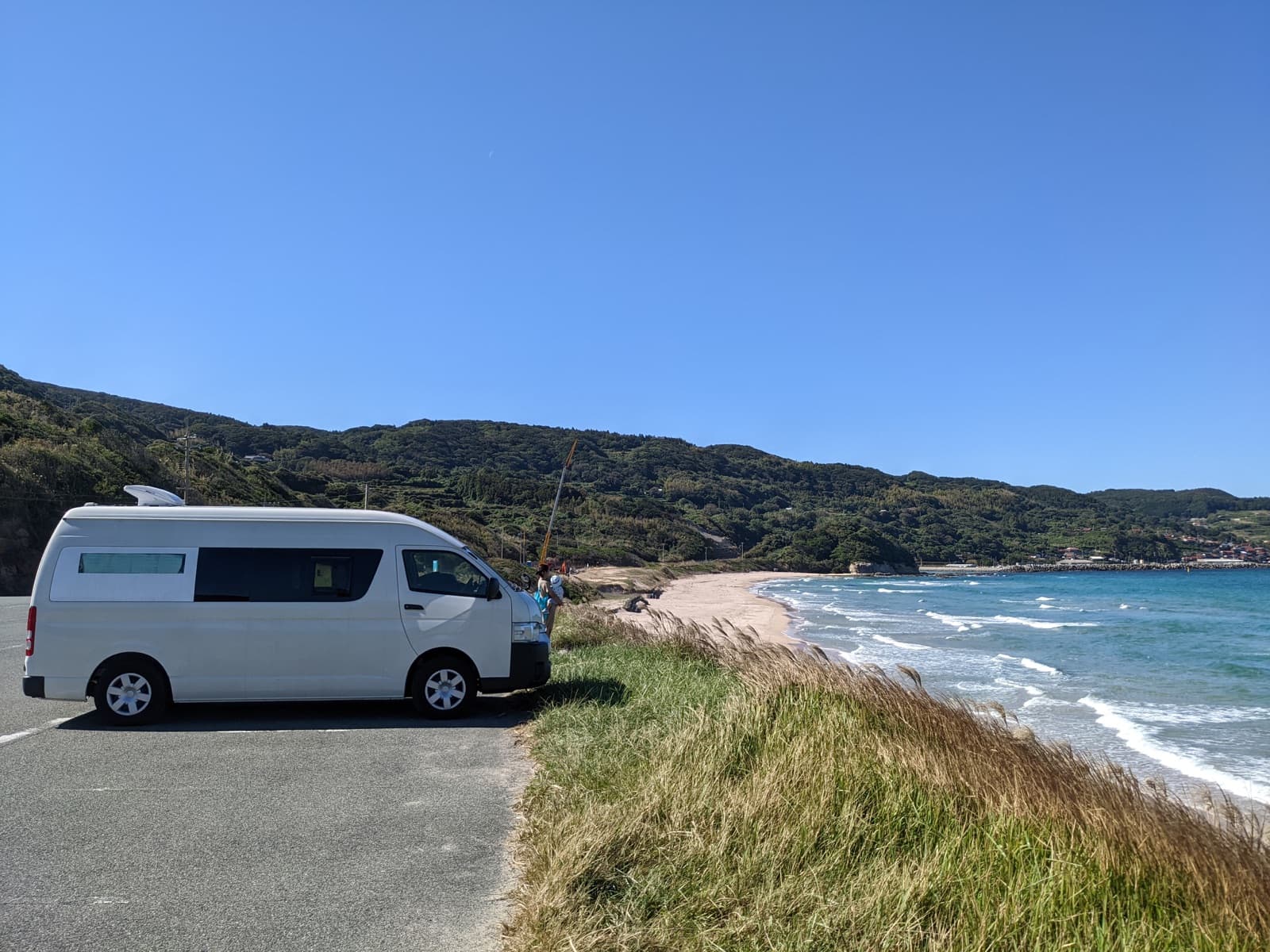
| Campervans | Check vehicle height, width, parking limits, mountain roads, and winter equipment |
Common questions
Do I need an International Driving Permit to drive in Japan?
Most tourists need an International Driving Permit based on the 1949 Geneva Convention, plus their normal driver's license. You must get the permit before arriving in Japan.
Can I drive in Japan with only my foreign license?
Usually no. A regular foreign license alone is not enough for most visitors. Some countries use an official Japanese translation instead of an IDP, but you still need the correct supporting document.
Is driving in Japan difficult for tourists?
Driving is usually calm and predictable, but visitors need time to adjust to left-side driving, narrow roads, toll roads, Japanese parking systems, and road signs.
Are expressways in Japan expensive?
Yes. Expressways are useful but can add a lot to a long campervan trip. Ask your rental company about ETC cards and compare toll routes with slower local roads.
License Requirements
To drive in Japan, you need one of the following:
- Japanese driver's license: Required for residents staying longer than one year.
- International Driving Permit (IDP): Valid for up to one year from entry date. Must be based on the 1949 Geneva Convention (not the 1926 Paris Convention). Obtain this in your home country before arriving in Japan.
- License translation: Citizens of Switzerland, Germany, France, Belgium, Monaco, and Taiwan can drive with their domestic license plus an official Japanese translation. Obtain the translation from JAF (Japan Automobile Federation) or your country's embassy.
NOTE: IDPs obtained outside your country of residence are not valid. You must get your IDP from the country that issued your regular license.
License by country or region
| License issued in | What you usually need for short-term tourist driving |
|---|---|
| United States, Canada, United Kingdom, Australia, New Zealand, Singapore, Malaysia, Thailand, Philippines, South Korea, and many other 1949 Geneva Convention countries | Your normal driver's license plus a valid International Driving Permit issued before you arrive in Japan |
| Switzerland, Germany, France, Belgium, Monaco, Taiwan | Your normal driver's license plus an official Japanese translation |
| China, Indonesia, Mexico, Brazil, and countries that do not issue Japan-recognized 1949 Geneva Convention IDPs | You generally cannot drive as a short-term visitor with only a local license or a non-recognized permit |
| Japan resident staying longer term | You may need to convert to a Japanese driver's license instead of relying on tourist documents |
The exact rule depends on the license country, the permit format, your status in Japan, and how long you have been in the country. Check before booking a campervan if your license country is unusual or if you live in Japan.
Basic Road Rules
Japan drives on the left side of the road. Vehicles are right-hand drive.
Speed limits are enforced strictly and displayed in km/h:
- Urban areas: 40–50 km/h
- Rural roads: 50–60 km/h
- Expressways: 100–120 km/h
Seatbelts are mandatory for all passengers. Children under six must use child seats.
Mobile phone use while driving is prohibited. Holding a phone while driving is illegal and carries heavy fines. Hands-free use (Bluetooth, speakerphone on a mount, earpiece) is generally permitted as long as it does not impair your driving — but keeping your eyes on the road is still your legal responsibility.
Drink driving: Japan has a zero-tolerance policy. Blood alcohol limit is effectively zero. Penalties include heavy fines, license suspension, and imprisonment. Passengers can also be fined for allowing an intoxicated person to drive.
Road Etiquette
Japanese drivers follow specific unwritten rules that maintain order:
- Hazard lights: Used to say thank you when another driver lets you merge or pass. A quick flash of the hazards acknowledges their courtesy.
- Honking: Rarely used. A short beep warns of danger; prolonged honking is aggressive and avoided.
- Emergency vehicles: Pull over immediately when you hear sirens. All traffic stops to clear a path.
- Pedestrian priority: Always yield to pedestrians, even where not technically required. Crosswalks mean stop unless the pedestrian has clearly finished crossing.
- Signal early: Indicate turns and lane changes well in advance. Sudden maneuvers are considered dangerous and rude.
Traffic Signs and Markings
Most signs use international symbols, but some are unique to Japan:
| Sign | Meaning | What to do |
|---|---|---|
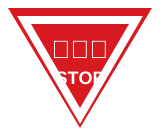 |
Stop / 止まれ | Come to a complete stop before the line, then check carefully before moving |
 |
No entry | Do not enter this road or lane, even if navigation tells you to turn |
 |
Speed limit | Stay at or below the posted km/h number |
 |
No parking | Short stopping may be possible, but do not park or leave the vehicle |
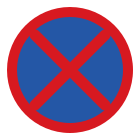 |
No stopping | Do not stop here at all except for unavoidable safety reasons |
 |
One way | Travel only in the arrow direction |
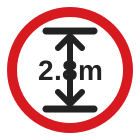 |
Height limit | Do not enter if your campervan, roof box, or pop-top exceeds the posted height |
Lane arrows painted on the road indicate permitted directions from each lane. Blue lane markings often indicate bicycle lanes or pedestrian-priority areas. When in doubt, slow down and follow local traffic rather than making a sudden move.
Toll Roads and Expressways
Japan's expressways (高速道路, kōsoku-dōro) are extensive but expensive. A cross-country trip can cost ¥20,000–¥40,000 in tolls alone.
Electronic Toll Collection (ETC):
- ETC cards allow automatic toll payment at speed.
- Rental companies provide ETC cards; tolls are charged to your credit card after return.
- Without ETC, you pay cash at toll gates. Have exact change ready, though attendants provide change if needed.
ETC discounts:
- Off-peak discounts apply on weekends and late nights.
- Some regions offer tourist passes with unlimited expressway use for a fixed period. Check regional tourism offices.
Tourist Expressway Passes:
NEXCO (Japan's expressway operator) offers discounted passes for foreign tourists visiting Japan. These passes allow unlimited expressway travel within specific regions for a set number of days at a fixed price — a significant saving on longer road trips. Visit the NEXCO expressway pass page or ask your rental company about current offers. Passes require proof of foreign nationality (passport) at purchase.
Toll and ETC examples
| Situation | Practical advice |
|---|---|
| You rent a campervan with ETC card included | Use ETC gates slowly, keep the card inserted, and expect tolls to be billed after return |
| You rent a van with ETC device but no card | Ask the rental company whether they can provide a card; foreign-issued credit cards may not always work smoothly at every toll context |
| You have no ETC card | Use the green general lane, take a ticket when entering, and pay by cash or accepted card when exiting |
| You are deciding between expressway and local roads | Expressways save time but can be expensive on long routes; local roads are slower but often more scenic |
| You are driving a tall RV | Check lane signs and toll booth height clearance, especially at older urban entrances and parking areas |
For long trips, compare toll routes before departure. A Tokyo-to-Kyushu or Hokkaido-style route can become expensive quickly, and ferries may be a better option for some legs.
Navigation
GPS in Japanese rental vans uses Japanese by default. Some rental companies offer English-language GPS units upon request.
If your route may involve island crossings or long coastal shortcuts, use our Car Ferry Explorer to compare vehicle ferry routes around Japan before you drive.
Recommended apps:
- Google Maps: Works well in Japan; provides turn-by-turn navigation.
- Navitime: Japan-specific navigation with accurate toll calculations and real-time traffic.
- Japan Maps by MAPLUS: Offline maps useful in rural areas with poor signal.
Map codes: Japanese car navigation systems use "Map Codes" (マップコード) — short numbers that pinpoint exact locations. Many campsites and michi no eki provide these codes on their websites.
Parking
Parking in Japan requires attention to rules and signage:
- Paid parking: ¥100–¥400 per hour in cities. Overnight parking in lots is generally prohibited unless specifically allowed.
- Michi no eki (roadside stations): Free parking, often overnight. Not all allow sleeping in vehicles; check for signs prohibiting overnight stays (禁).
- Convenience stores: Parking is for customers. Extended stays without purchasing anything may result in towing.
- No-parking zones: Strictly enforced. Illegally parked vehicles are ticketed and towed quickly, especially in cities.
- Coin parking: Insert coins or use IC cards (Suica, Pasmo) to pay. Display the ticket on your dashboard.
NOTE: See our detailed guide on places to stay with a camper for overnight parking options.
Parking examples
| Parking situation | What to check |
|---|---|
| Coin parking in a city | 24-hour maximum price, vehicle height limit, flap-lock system, and whether overnight parking is allowed |
| Supermarket or convenience store | Use only while shopping, do not sleep there, and do not leave the vehicle for unrelated sightseeing |
| Tourist attraction parking | Closing time, overnight restrictions, and whether gates are locked after hours |
| Beach or park parking lot | Signs about camping, overnight parking, fires, noise, and seasonal closure |
| Michi no Eki | Local signs, engine idling rules, whether long stays are discouraged, and how crowded it gets at night |
| Hotel parking | Height clearance, reservation requirement, extra fee, and whether an outdoor lot is available for taller vans |
If you are driving a campervan, do not assume a normal parking lot will fit. A Hiace-style van may be fine in many open-air lots, while larger RVs can have problems with narrow entrances, tree branches, height bars, and small turning spaces.
Gas Stations
Types of fuel:
- Regular (レギュラー): 89–90 octane. Most rental vans use this.
- High-octane (ハイオク): 95+ octane. Higher performance; more expensive.
- Diesel (軽油): For diesel vehicles only. Do not put in gasoline engines.
Full service vs. self-service:
- Full-service stations: Attendants pump fuel, clean windows, take payment. Common in rural areas. Stay in your vehicle unless directed otherwise.
- Self-service stations: Pump your own fuel, pay at the machine. More common in cities. Some require prepayment.
Payment: Cash and credit cards accepted. IC cards work at some stations.
Narrow Roads and Mountain Driving
Rural and mountain roads present specific challenges:
- Width: Many roads, especially in villages and mountains, are barely wider than one vehicle. Mirrors may touch vegetation. Proceed slowly.
- Curves: Blind corners are common. Honk before entering sharp curves to alert oncoming traffic.
- Single-lane bridges: Alternating traffic. Check for oncoming vehicles before entering.
- Right-of-way on narrow roads: On one-lane mountain or rural roads, the vehicle going uphill has priority. The downhill vehicle should reverse to the nearest passing point to let the uphill vehicle through.
- Snow: Mountain roads close in winter. Check conditions before traveling. Carry snow chains when required by road signs.
- Wildlife: Deer, boar, and monkeys cross roads, especially at dawn and dusk. Reduce speed in forested areas.
Campervan-specific warnings
| Risk | Why it matters | What to do |
|---|---|---|
| Height limits | Parking garages, tunnels, toll booths, trees, and hotel entrances may not fit taller vans | Know your exact vehicle height in meters and write it somewhere visible |
| Width on rural roads | Many scenic roads are narrow, with gutters, stone walls, or no shoulder | Slow down early and use passing spaces instead of forcing through |
| Rear overhang | Larger RVs swing wider than normal cars when turning | Take corners slowly and watch posts, walls, and curb stones |
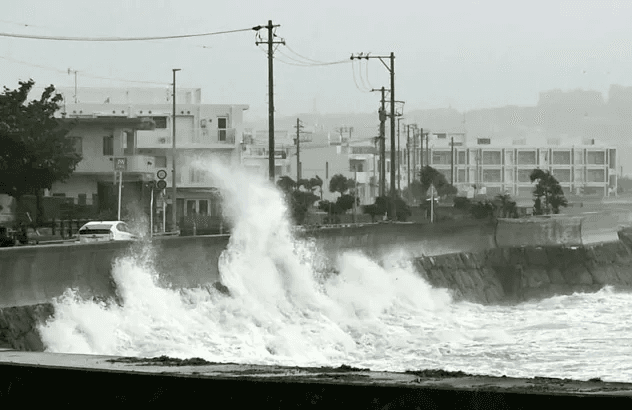
| Mountain weather | Snow, fog, typhoons, and heavy rain can make roads unsafe quickly | Check weather and road closures before committing to mountain routes |
| Winter equipment | Snow regions may require winter tires or chains | Confirm tires, chains, and heater setup with the rental company before pickup |
| Sleeping fatigue | Long driving days plus poor sleep can build up fast | Keep first and last rental days short and schedule proper rest stops |
Safety Tips
- Winter tires: Mandatory in snowy regions. Rental companies fit winter tires seasonally; confirm before departure.
- Emergency kit: Rental vans should include warning triangles and reflective vests. Use them if you break down.
- Breakdowns: Call the rental company's emergency number. Most include roadside assistance in the rental fee. If you need repair vocabulary, see our Japanese mechanic phrases guide.
- Accidents: Do not move the vehicle until police arrive (except to prevent further danger). Call 110 for police, 119 for ambulance. Contact your rental company immediately. For the full sequence, read what to do after a car accident in Japan.
- Fatigue: Avoid driving long distances without breaks. Service areas (SA) and parking areas (PA) on expressways offer rest stops every 30–50 km.
Useful Phrases
For more specific situations, we also have a mechanic phrase guide and an accident vocabulary guide.
| English | Japanese | Pronunciation |
|---|---|---|
| Where is the gas station? | ガソリンスタンドはどこですか? | Gasorin sutando wa doko desu ka? |
| Fill it up, please | 満タンお願いします | Mantan onegaishimasu |
| Regular / High octane | レギュラー / ハイオク | Regyurā / Haioku |
| Diesel, please | 軽油をお願いします | Keiyu wo onegaishimasu |
| Credit card | クレジットカード | Kurejitto kādo |
| I had an accident | 事故を起こしました | Jiko wo okoshimashita |
| Please call the police | 警察を呼んでください | Keisatsu wo yonde kudasai |
| My car broke down | 車が故障しました | Kuruma ga koshō shimashita |
| Where can I park? | どこに駐車できますか? | Doko ni chūsha dekimasu ka? |
| Is overnight parking allowed here? | ここで車中泊できますか? | Koko de shachūhaku dekimasu ka? |
| I am lost | 道に迷いました | Michi ni mayoimashita |
| Please go straight | まっすぐ行ってください | Massugu itte kudasai |
| Turn left / Turn right | 左に曲がってください / 右に曲がってください | Hidari ni magatte kudasai / Migi ni magatte kudasai |
Summary Checklist
Before driving in Japan, confirm:
- Valid license (Japanese, IDP, or translated domestic license)
- Understand left-side driving
- Familiar with basic Japanese road signs
- ETC card obtained (for expressway travel)
- Navigation app downloaded and tested
- Rental company emergency number saved
- Winter tires confirmed (if traveling in snow season)
Driving in Japan rewards preparation. The roads are well-maintained, signage is clear, and traffic flows predictably once you understand local customs. With proper documentation and awareness, van travel in Japan is both safe and enjoyable.