
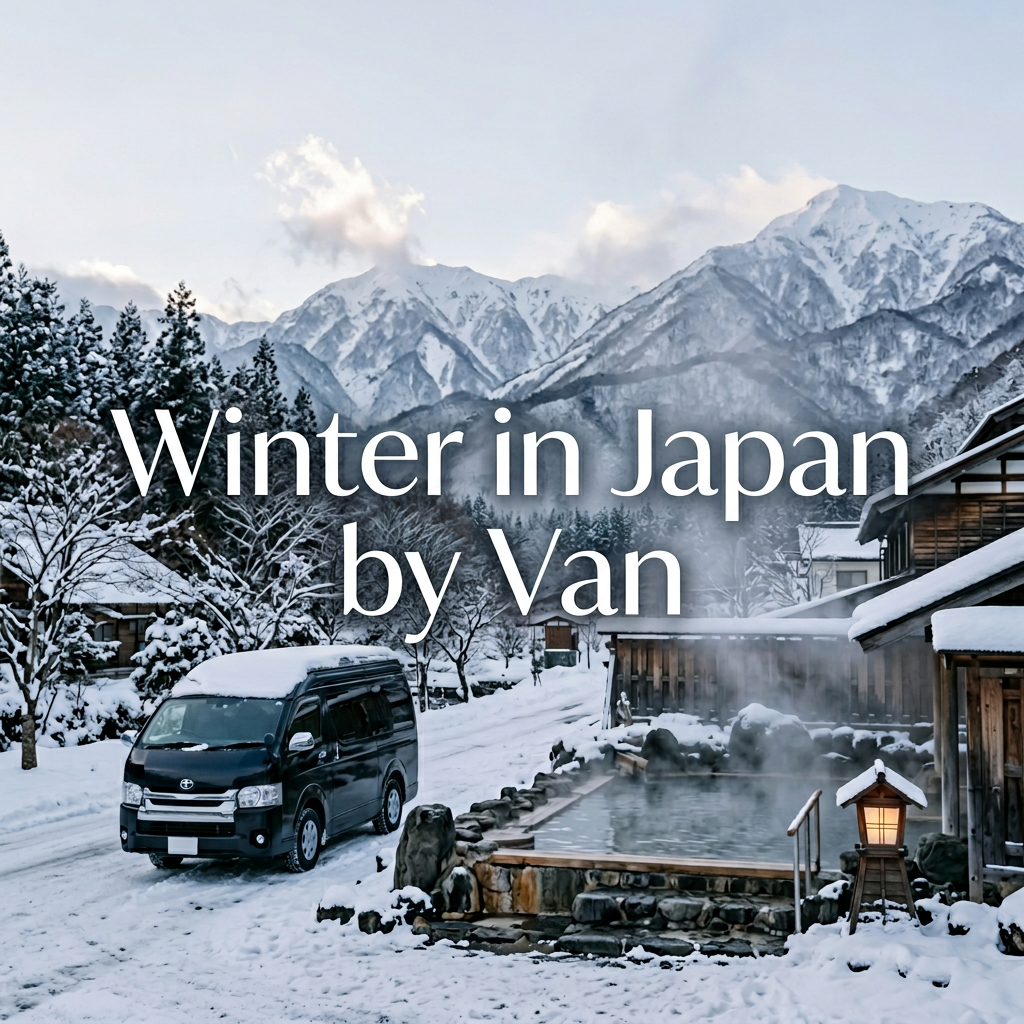
Winter in Japan varies dramatically by region, from heavy snow and sub-zero temperatures in Hokkaido and the Alps to mild conditions in southern areas. The season demands proper preparation for cold-weather vanlife but offers unique experiences including onsen culture, winter festivals, and uncrowded travel.
What Makes Winter Special
Snow transforms the Japanese Alps into a skiing destination with powder conditions attracting international visitors. Traditional farmhouses (kominka) display characteristic snow-capped thatched roofs.
Onsen towns achieve peak atmosphere during snowfall, with steam rising from outdoor baths into freezing air. Major winter festivals include the Sapporo Snow Festival in February with massive illuminated ice sculptures.
Regional variation allows for dramatically different winter experiences: Okinawa and southern Kyushu remain mild enough for coastal camping while northern regions experience heavy snow and freezing temperatures.
Tourist numbers drop significantly, resulting in quieter roads, empty attractions, and increased availability at normally crowded sites.
The Weather: What to Expect
Winter varies dramatically by region. Hokkaido and the Japanese Alps receive heavy snow, with temperatures regularly dropping to -10°C or lower. Tokyo and the Pacific coast stay milder, rarely below 0°C. Okinawa remains above 10°C most days.
January and February are the coldest months. Coastal areas experience biting winds, while inland areas face freezing nights. The air is dry, making cold more manageable.
Days are short. The sun sets around 5 PM in December, earlier in northern areas. Planning for limited exploration time is necessary.
Mountain regions receive heavy snow. Some passes close completely from December to April. Road conditions should always be checked before driving into mountain areas.
Nights are freezing. Without proper insulation and heating, winter vanlife becomes dangerous. See the detailed guide on how to stay hot sleeping in a car for safety-critical information.
What to Wear
Winter requires serious gear. Layering is critical: merino wool or synthetic base layers, insulating mid-layers like fleece or down, and a waterproof, windproof shell.
Extremities require protection: quality gloves, a warm hat covering the ears, and warm socks. Cold feet and hands make sleeping and tasks difficult. Chemical hand warmers are useful for emergencies.
Traction devices for boots help when hiking on snow and ice. Slipping is easy, and injuries are serious when traveling alone.
Inside the van, change into dry, warm clothes immediately. Wet clothes from outside should stay outside. Moisture is the enemy in winter.
Vanlife Advantages
Empty roads: Tourist traffic vanishes. Popular routes become peaceful drives. Viewpoints that are packed in other seasons become accessible.
No crowds: Famous temples, trails, and towns are significantly less crowded. Photography without people becomes possible.
Onsen culture: Natural hot springs provide unmatched comfort after cold days—the contrast of freezing air and steaming water is a defining winter experience.
Stunning scenery: Snow-covered landscapes, the Japanese Alps under fresh powder, and villages blanketed in white justify the challenges of cold weather.
Lower costs: Off-season pricing applies to campgrounds, attractions, and sometimes food.
Southern escape: When northern regions freeze, Kyushu and Okinawa offer mild weather, allowing travelers to chase warmer conditions.
Vanlife Disadvantages
The cold: Without proper preparation, winter vanlife becomes miserable or dangerous. Insulation and heating are not optional.
Snow driving: Mountain passes close. Chains or snow tires become necessary. Whiteout conditions are terrifying.
Shorter days: Limited daylight restricts driving and exploration. You feel the pressure of early darkness.
Frozen water: Tanks and pipes can freeze, cracking your system. Management is constant. I drain my tanks on the coldest nights.
Limited facilities: Some campgrounds and michi no eki close for winter. Options shrink.
Fuel costs: Heating requires more propane or diesel. Budget accordingly.
Safety risks: Getting stuck in snow, freezing at night, accidents on ice. Winter demands respect. Read our guide on how to stay safe when vanlifing.
Carbon monoxide risk: If you use a diesel heater, gas stove, or any combustion appliance inside your van, ensure proper ventilation and install a CO detector. Carbon monoxide is odourless, colourless, and can be fatal at elevated concentrations in an enclosed space. This is not optional safety equipment.
Food Specialties
Winter food is about warmth and comfort:
Nabe: Hot pot dishes cooked at your table. Perfect for van cooking on cold nights. Throw in vegetables, meat, tofu, noodles. Eat until you are warm from the inside.
Ramen: Rich, warming broth that hits different in freezing weather. Every region has its style. I chase ramen in winter.
Oden: Convenience stores sell this winter staple: eggs, daikon, konnyaku, fish cakes simmered in dashi broth. Cheap, warm, filling.
Mochi: Fresh mochi is a New Year tradition. Grilled until crispy outside, gooey inside, eaten with soy sauce. Simple and perfect.
Crab: Winter is crab season. Snow crab, king crab, expensive but unforgettable. Try it at least once.
Fugu: Pufferfish is at its best in winter. Served as delicate sashimi or hot pot. It is a genuine bucket-list experience — but fugu must be prepared by a specially licensed chef at a certified restaurant, as incorrect preparation of the liver and skin (which contain a lethal toxin) can be fatal. Never attempt to prepare fugu yourself. Stick to licensed establishments and you'll be completely safe.
Mikan: Japanese mandarins are everywhere in winter. Easy to peel, sweet, perfect for van snacking.
Curry: Japanese curry, thick and warming. Available everywhere. Ideal cold weather fuel.
Recommended Places
Hokkaido: Powder snow and world class skiing. Niseko, Furano, the backcountry. Requires preparation but rewards the brave. I spend weeks here in deep winter.
Nagano: Onsen towns like Nozawa Onsen and Shibu Onsen offer hot springs and proximity to the snow monkey park where macaques soak in thermal pools.
Shirakawa-go: UNESCO village of traditional thatched houses under snow. Iconic and worth the crowds on weekends. Visit midweek if possible.
Kyushu: Escape the snow entirely. Aso's caldera, Kagoshima's volcanoes, mild winter camping. Different world from Hokkaido.
Okinawa: Beach weather in January. Snorkeling, diving, tropical vibes. The ultimate winter escape when you cannot handle more cold.
Tohoku: Deep snow and winter festivals. Aomori's Nebuta in winter version. Akita's snowy landscapes. Beautiful and remote.
Practical Tips
Insulation is non-negotiable. Vans without proper insulation should not attempt winter vanlife in northern Japan. See the guide on how to stay hot sleeping in a car for complete information.
Carry snow chains and know how to use them. Practice installation before an emergency situation arises. Rental vans in winter should come equipped with chains.
Plan shorter driving days. Sunset by 5 PM means parking by 4 PM to set up in daylight. Schedule accordingly.
Monitor weather closely. Snow storms can close roads for days. Maintain backup plans and know the location of the nearest town.
Onsen culture becomes essential in winter. Morning and evening soaks help maintain warmth.
Keep phones charged and emergency numbers accessible. Winter increases the likelihood of mechanical issues or weather-related problems.