
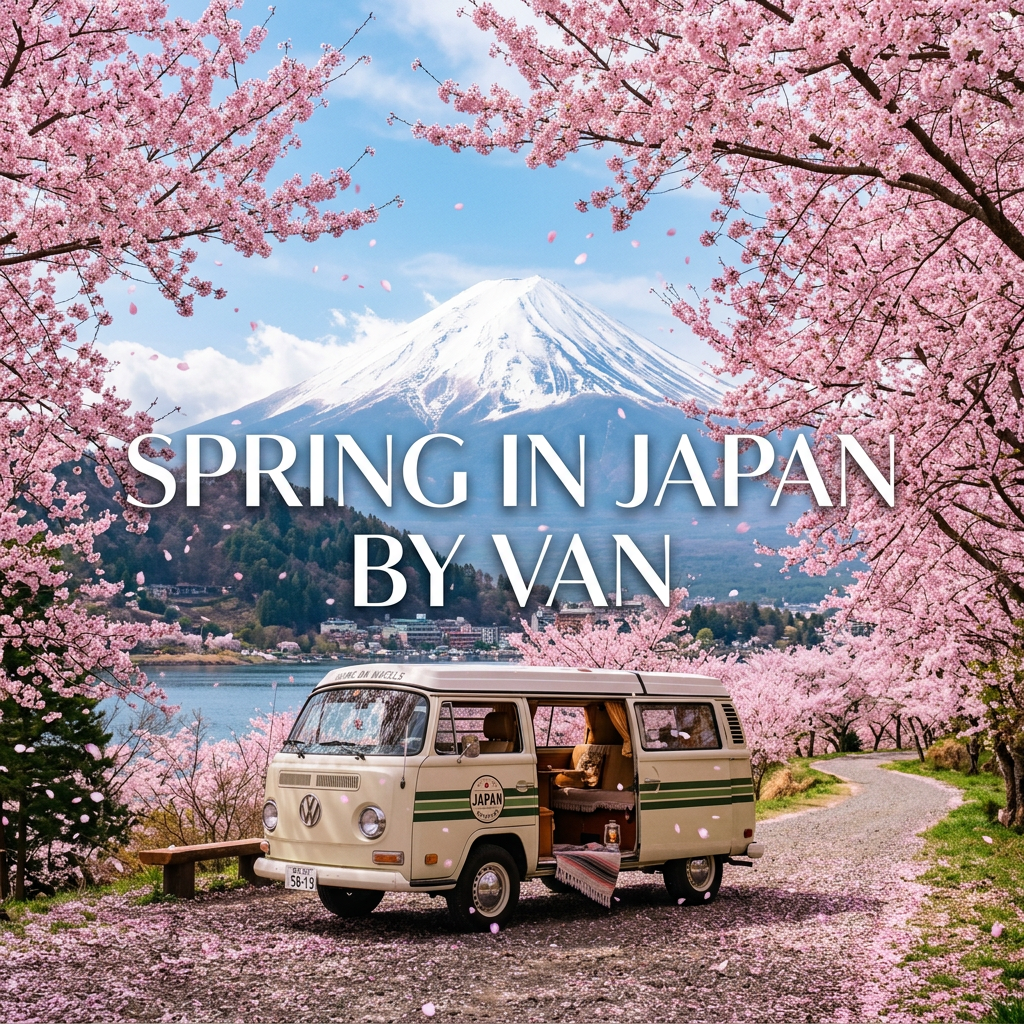
Spring in Japan transforms the landscape with cherry blossoms, mild temperatures, and renewed energy throughout the country. The season runs from March through May, offering ideal conditions for vanlife with manageable temperatures and cultural events unique to this time of year.
What Makes Spring Special
The cherry blossom, or sakura, dominates the season, but spring offers much more. Plum blossoms (ume) appear first in February, followed by wisteria (fuji) and azaleas (tsutsuji), each adding layers of color to the landscape.
Spring marks the new school year and fiscal year in Japan, creating a cultural atmosphere of fresh starts and new beginnings. This energy translates into busy but vibrant travel conditions.
The sakura bloom typically follows a northward path: Kyushu in late March, Honshu in April, and northern regions in late April to early May.
The Weather: What to Expect
Spring weather in Japan is generally pleasant. March temperatures range from 10 to 15°C with occasional cold snaps. By April, daytime temperatures climb to 15 to 20°C, sometimes warmer. May can reach 25°C on sunny days.
Rain is common in spring. Southern Japan experiences rainy season conditions in April and May. Showers can last for days, so indoor backup plans (museums, onsen, restaurants) are useful.
Nights remain cool, usually 5 to 15°C depending on location and elevation. A sleeping bag rated to at least 10°C is recommended. Mountain regions stay cold longer, with possible frost in late April at higher elevations like Nagano.
What to Wear
Layering is essential for spring weather. Merino wool base layers handle temperature swings and remain fresh through multiple wears. Pack a light down jacket or fleece for evenings and a waterproof shell for rain.
Footwear should include waterproof hiking boots for muddy trails and slip-on shoes for convenience in the van. Bring a warm hat for cold mornings and sunglasses as the sun strengthens.
Vanlife Advantages
Perfect temperatures: Most nights require neither heating nor cooling—a good sleeping bag suffices.
Longer days: Daylight extends to 6 PM or later by May, providing more time for exploration and finding parking before dark.
Beautiful camping: Sakura trees line rivers, temple gardens, and roadside stations (michi no eki), offering scenic overnight parking.
Festivals: Hanami parties occur throughout the country. Locals gather under trees with food and drinks, and visitors are often welcome to participate if they contribute something to share.
Vanlife Disadvantages
The crowds: Popular viewing spots fill by 8 AM during peak bloom. Arriving early, staying late, and having backup locations helps avoid congestion.
Unpredictable weather: Forecasts can change quickly, with spring storms developing within hours. Checking radar before committing to remote overnight locations is advisable.
Higher costs: Some campgrounds adjust pricing during peak tourist season.
Pollen: Sugi cedar pollen is heavy in spring, covering surfaces in yellow dust. Antihistamines are recommended for allergy sufferers.
Food Specialties
Spring ingredients are fresh and delicate:
Sakura mochi: Sweet rice cakes wrapped in salty cherry leaves. The contrast is addictive. Available at every convenience store during the season.
Takenoko: Fresh bamboo shoots, dug from the earth and boiled immediately. Find them at rural morning markets.
Spring vegetables: Asparagus, fava beans, mountain greens called sansai. Perfect for simple van cooking. Check out our guide on cooking in a camper for simple spring recipes.
Strawberries: Japanese strawberries are expensive but incredible. Worth the splurge.
Sakura flavored everything: From lattes to sandwiches to beer. Some of it is good. Some is novelty. Try it all and decide for yourself.
Recommended Places
Lake Kawaguchi: Yes, it is crowded. Yes, it is worth it. Seeing Mount Fuji framed by cherry blossoms reflected in the lake is a bucket list moment. I park at the michi no eki on the north shore and walk the lakeside path at dawn.
Yoshino: Over 30,000 cherry trees covering a mountainside. Spectacular but plan ahead. The roads are narrow and parking fills fast. Consider staying at a nearby michi no eki and taking the bus up.
Hirosaki Castle: My personal favorite. The moat fills with fallen petals creating a pink carpet. The castle against the blossoms is pure magic. Late April timing means fewer crowds than the famous spots further south.
Izu Peninsula: Coastal blooms, mild weather, onsen towns, and fewer international tourists. I could spend all of spring here.
Nara Park: Deer wandering among ancient temples and cherry trees. Overnight at a nearby michi no eki and take the train in. The park gets too crowded for van parking during peak season.
Practical Tips
Book nothing. Spring is about chasing the bloom. Follow the sakura forecast online. Start in Kyushu in late March, follow the front north through Honshu in April, catch the northern spots in late April and early May. Flexibility is your superpower.
Always have a backup parking spot. The place you planned to stay might be full. Know where the next michi no eki is. Our guide on places to stay with a camper covers all the options.
Embrace the rain. Some of my best hanami photos were taken during light drizzle. The wet petals glow. The crowds thin. Pack that waterproof jacket and keep going.
Spring vanlife in Japan is about being present for a fleeting moment. The blossoms last a week, maybe two. Make sure you are there to see them.