
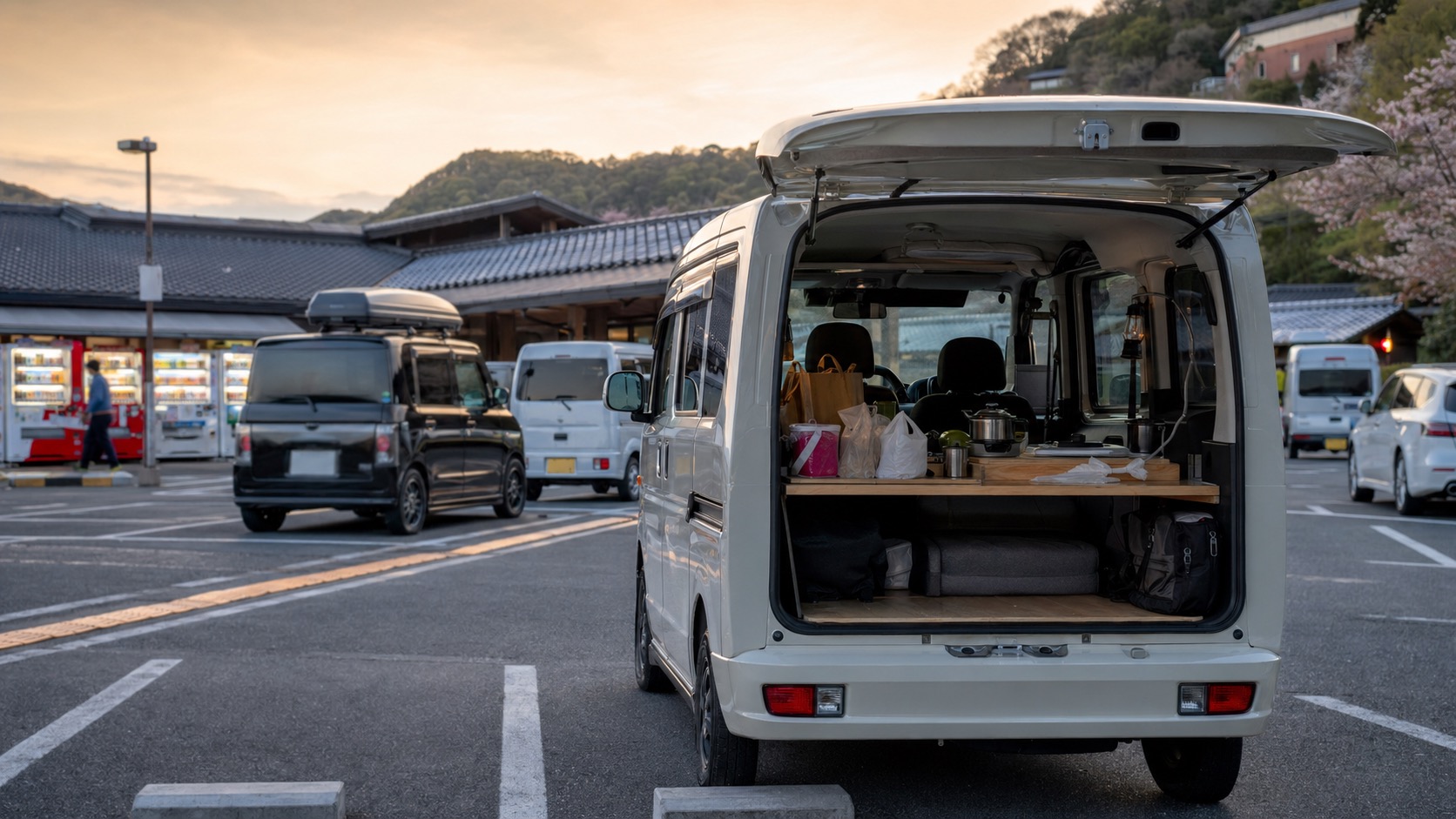
Golden Week is one of the best times of the year to travel in Japan. The weather is usually comfortable, the days are longer, and a lot of people finally have enough free time to leave the city.
With hotel and ryokan prices high during national holidays, and many households watching their travel budget more carefully, more Japanese travelers may choose to travel by car, sleep in their vehicle, or stay at cheaper campsites instead of booking traditional accommodation. That makes the road-trip side of Golden Week feel even busier.
But if you are planning to sleep in your car, van, or camper during Golden Week, you should know one thing before you go: this is not a normal road trip week.
In 2026, Golden Week runs around April 29 to May 6, with the busiest travel window likely around May 2 to May 6. A lot of Japanese travelers will be on the road at the same time, and that changes everything: traffic, restaurants, campsites, michi no eki, supermarkets, parking lots, toilets, and even quiet rural areas.
Car camping is still possible. You just need to plan differently.
Getting Out of the City Can Be the First Problem
If you are starting from Tokyo, Osaka, Nagoya, Kyoto, Fukuoka, or another big city, the first challenge might simply be leaving.
During Golden Week, expressways around major cities can get extremely busy, especially at the beginning of the holiday period. The same thing happens in reverse when everyone returns home near the end of the break.
So do not only plan your destination. Plan your escape route.
Leaving on the morning of the first big holiday day can mean spending hours in traffic before the trip has even started. If you can, leave very early in the morning, late at night, or one day before the main rush. Another option is to choose a closer destination and avoid crossing the most popular expressway routes.
For Golden Week, your schedule should be built around traffic, not around ideal sightseeing plans.
Campsites Will Be Crowded or Fully Booked
Golden Week is peak camping season in Japan. Families, couples, groups of friends, motorcycle travelers, vanlifers, and car campers are all trying to enjoy the same few days outside.
Popular auto campgrounds, especially near mountains, lakes, beaches, hot springs, and famous sightseeing areas, can be fully booked well in advance. Even if a campsite usually accepts same-day arrivals, I would not rely on that during Golden Week.
If you want to stay at a proper campground, book early. If everything is full, look for smaller private campsites, RV parks, or less famous areas away from major tourist routes.
Also remember that crowded campsites feel different from normal campsites. Check-in can take longer, toilets and sinks may have lines, quiet hours may be less quiet, and you may have less space than expected.
We explain the different overnight options in more detail in our guide on where to sleep with a camper in Japan.
Michi no Eki Can Be Very Busy at Night
Michi no Eki are one of the most useful parts of road travel in Japan. They often have toilets, vending machines, local food, souvenir shops, and parking.
But during Golden Week, popular michi no eki can become extremely busy in the evening. A lot of Japanese road trippers stop there to rest, eat, use the toilets, buy local products, or sleep in their cars. By night, the parking lot may be full of vans, kei cars, campers, and families preparing for the next day.
If you are planning to sleep at a michi no eki, do not assume you can arrive late and find a quiet corner. Famous roadside stations near tourist destinations, onsen towns, beaches, or major roads may be packed.
It is better to arrive earlier, have backup options, and avoid the most famous locations if you want a calmer night.
If every michi no eki nearby looks too busy, our Spot Finder can help you look for smaller parking areas with toilets. These spots are often quieter than famous roadside stations, especially if they are away from tourist routes, but you should still check signs locally and keep the stay discreet.
Also, remember that michi no eki are rest areas, not campsites. Do not set up chairs, tables, tents, tarps, or cooking gear in the parking lot. Keep noise low, do not block spaces, take your trash with you, and buy something from the local shop if it is open.
Restaurants May Be Closed, Full, or Too Busy
One thing many travelers underestimate during Golden Week is food.
Some small restaurants close during the holiday. Others are open but completely full. In tourist areas, you may find long lines before lunch even starts. Family restaurants and roadside places can also be crowded, especially near popular highways and sightseeing spots.
That is why it is smart to prepare food in advance.
Before entering a remote area, stop at a supermarket or convenience store and buy enough food for at least one full day. Simple meals are best: rice packs, instant noodles, bread, eggs, canned fish, salad, fruit, coffee, tea, snacks, and plenty of water.
If you have a safe cooking setup, cooking in your camper or at a proper campsite can make the trip much easier. But be careful: never use charcoal, gas burners, or open flame inside a closed vehicle. Carbon monoxide poisoning and fire are real risks. Ventilation matters, and some places do not allow outdoor cooking.
A good Golden Week rule is simple: do not wait until you are hungry to look for food.
You can read more about simple setups in our guide on cooking in a camper in Japan.
Supermarkets Are Your Friend
During Golden Week, supermarkets are often more reliable than restaurants.
If you are passing through a normal town before reaching a tourist area, stop there. Local supermarkets usually have bento, sushi, bread, meat, vegetables, drinks, ice, and regional snacks. They are also usually cheaper and less stressful than crowded restaurants near sightseeing spots.
Try to shop before evening. By late afternoon or night, popular items may be sold out, especially bento, bread, and ready-to-eat meals.
A small cooler box can make a big difference. It lets you carry drinks, breakfast food, and ingredients without depending on restaurants every day.
Toilets, Trash, and Water May Be Stressed
Golden Week puts pressure on public facilities.
Toilets at michi no eki, service areas, parks, and campsites can be busy. Some may run out of toilet paper. Trash bins may be full or unavailable. Water taps may be crowded or not meant for campers.
Bring your own basics: toilet paper, wet wipes, hand sanitizer, trash bags, and enough drinking water. In Japan, you are often expected to take your trash with you, especially when camping or using rural rest areas.
The more self-sufficient you are, the less stressful your trip becomes. We also have a full guide on dealing with trash while vanlifing in Japan.
Spring Weather Can Still Be Cold at Night
Golden Week feels like spring, but nights can still be cold depending on where you go.
Mountain areas, lakesides, forests, and highland parking lots can be much colder than cities. Even if the daytime temperature feels warm, sleeping in a car at night can become uncomfortable without the right gear.
Bring layers, a warm sleeping bag or blanket, and something to insulate your sleeping area. Also think about condensation. If all windows are closed, moisture can build up inside the car overnight. A little ventilation helps, but you need to balance it with warmth and privacy.
Do not prepare only for sunny daytime weather. Prepare for cold nights, rain, and wind too. Our guide on how to stay warm sleeping in a car in Japan covers the details.
Onsen and Baths May Be Crowded
A hot spring after a day of driving or camping sounds perfect, and it often is. But during Golden Week, onsen near campsites, tourist towns, and mountain roads can be crowded.
Some places may have limited hours, long waits, or parking problems. Smaller local baths may close earlier than expected. If you rely on one specific onsen, you may be disappointed.
Check opening hours before you go. Bring towels, coins, cash, and a backup bathing option. If you can shower earlier in the day instead of during the evening rush, it may be much easier.
Choose Less Famous Destinations
Golden Week is not always the best time to visit the most famous places.
Fuji Five Lakes, Hakone, Izu, Karuizawa, Nikko, Kamikochi, major beaches, famous onsen towns, and popular national parks can be beautiful, but they can also be crowded, expensive, and stressful during this period.
For car camping, less famous places are often better.
Look for small towns, quiet rivers, local parks where overnight parking is allowed, lesser-known coastlines, rural roads, and campgrounds that are not trending on social media. The goal is not always to find the most spectacular destination. During Golden Week, the better goal may be finding a place where you can actually relax.
Have a Backup Plan for Everything
Golden Week rewards flexible travelers.
Your first-choice campsite may be full. Your restaurant may be closed. Your michi no eki may be packed. The expressway may be jammed. The onsen may be too crowded. The weather may change.
That does not mean the trip is ruined. It just means you need backup plans.
Before leaving, prepare several possible sleeping spots, food options, bathing options, and driving routes. Download offline maps or save locations in advance. Keep enough fuel in the tank and enough food in the car.
Car camping during Golden Week is much easier when you do not depend on one perfect plan.
Final Thoughts
Camping in your car during Golden Week in Japan can be a great experience, but it is not the time to travel without preparation.
Expect traffic when leaving and returning to big cities. Expect popular campsites to be full. Expect michi no eki to be busy at night. Expect restaurants to be closed, crowded, or slow. Expect famous destinations to feel very different from a normal weekend.
The best strategy is to plan your food, sleep, route, toilet stops, and backup options before you go.
If you do that, Golden Week car camping can still be fun. You just need to travel with the mindset that many other people are trying to enjoy Japan at the same time.